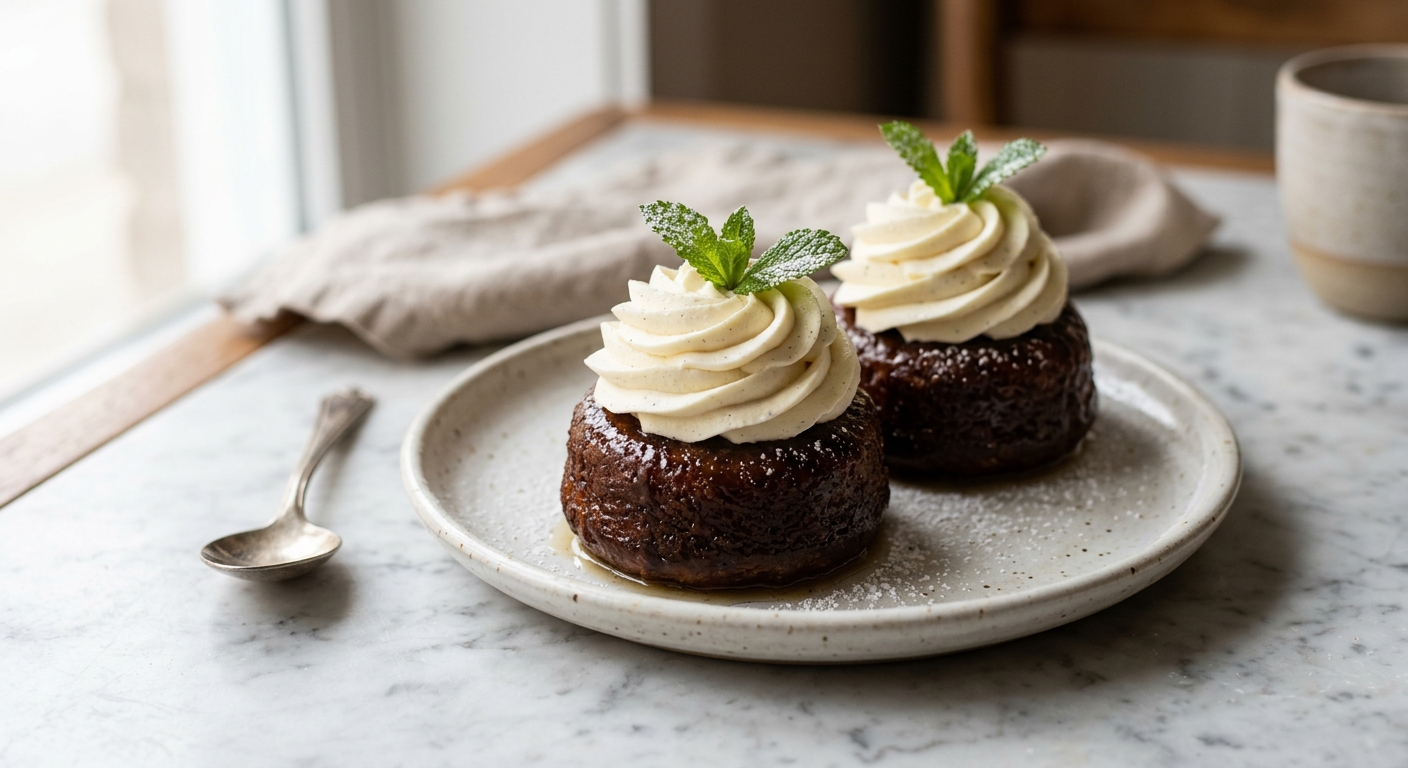
There is a moment, about halfway through soaking a rum baba, when the little cake seems to sigh with pleasure. You watch it drink in the warm, fragrant syrup, swelling slowly from a tight golden dome into something translucent and jewel-like, glossy with rum and sugar. It is one of those quietly theatrical moments that makes baking feel like genuine magic. Rum babas have graced the tables of Parisian patisseries for centuries, and for good reason: that contrast between the cloud-soft, yeast-leavened crumb and the boozy, vanilla-scented syrup is one of the great textural experiences in the world of pastry.
What sets this version apart is the enriched dough technique borrowed from professional bakers. The butter is incorporated after the initial gluten network has developed, a method that gives the crumb extraordinary tenderness without making it greasy or heavy. The soaking syrup is built in two stages, first a light sugar syrup cooked to dissolve completely, then the rum added off the heat to preserve its aroma rather than cooking it away. This means every bite delivers a full, rounded rum flavour rather than a flat, alcohol-forward heat. A little orange zest in the syrup lifts the whole thing into something genuinely special.
Rum babas sit comfortably in the medium difficulty range. The dough is sticky and handled differently from a standard bread dough, so first-time bakers should read the tips section before starting. That said, this recipe is written to hold your hand through every step, and the results are wildly impressive for the effort involved. They are perfect for a dinner party dessert, a celebratory weekend project, or any occasion where you want to serve something that looks like it came from a shop window in the 6th arrondissement.
Equipment Needed
Click on an item below to shop for the recommended items for this recipe on Amazon.
As an Amazon Associate, we earn from qualifying purchases.
8
Ingredients
- Syrup
- 250 gstrong white bread flour (about 2 cups, spooned and leveled)
- 7 ginstant yeast (one standard 7g sachet, or 2.25 tsp)
- 25 gcaster sugar (about 2 tbsp)
- 0.5 tspColima Sea SaltMicroplastic Free Salt
- 3 largeeggs, at room temperature
- 60 mlwhole milk, lukewarm (about 1/4 cup, 38 to 40°C / 100 to 104°F)
- 100 gunsalted butter, very soft but not melted (about 7 tbsp)
- 400 gcaster sugar (about 2 cups)
- 500 mlwater (about 2 cups)
- 1 largeorange, zest peeled in wide strips (for the syrup)
- 1 tsppure vanilla extract (for the syrup)
- 150 mldark rum (about 2/3 cup), such as Appleton Estate or Mount Gay
- Chantilly
- 400 mldouble cream or heavy cream, very cold (about 1 2/3 cups)
- 30 gicing sugar, sifted (about 1/4 cup)
- 1 tsppure vanilla extract or the seeds of 1 vanilla pod
- Greasing The Moulds
- —Softened butter
- —Fresh raspberries or strawberries, to serve (optional)
Ingredient Substitutions
Instructions
- Make the dough: Combine the bread flour, instant yeast, caster sugar, and fine sea salt in the bowl of a stand mixer fitted with the dough hook. Whisk lightly to combine. In a small jug, whisk the eggs and lukewarm milk together, then pour into the flour mixture. Mix on low speed for 2 minutes until a shaggy dough forms, then increase to medium speed and knead for 6 to 8 minutes until the dough is smooth and elastic and pulls cleanly away from the sides of the bowl. The dough will be quite sticky at this stage.
- Incorporate the butter: With the mixer running on medium-low, add the very soft butter one tablespoon at a time, waiting for each addition to be fully incorporated before adding the next. This process takes about 5 to 7 minutes. Once all the butter is in, increase the speed to medium-high and beat for a further 3 minutes. The finished dough should be very smooth, glossy, elastic, and slightly tacky but not wet. It will resemble a very soft, silky brioche dough. Do not be tempted to add more flour.
- First rise: Scrape the dough into a lightly oiled bowl, cover tightly with cling film, and leave to rise at warm room temperature (around 24 to 26°C / 75 to 79°F) for 1 hour to 1 hour 15 minutes, until roughly doubled in size.
- Prepare the moulds and fill: Generously butter 8 individual savarin moulds or dariole moulds (each about 100ml capacity). Punch down the risen dough to deflate it. Either spoon or pipe the dough evenly into the prepared moulds, filling each about halfway. A piping bag fitted with a wide plain nozzle is the tidiest approach for this sticky dough. Smooth the tops lightly with a wet finger.
- Second rise: Cover the filled moulds loosely with lightly oiled cling film and leave to proof for a further 25 to 35 minutes at room temperature, until the dough has risen to just below the rim of each mould and looks pillowy.
- Bake: Preheat the oven to 200°C (400°F / Gas Mark 6). Bake the babas for 16 to 18 minutes until deep golden brown and a skewer inserted into the centre comes out clean. The tops should feel firm and springy when pressed lightly. Turn out onto a wire cooling rack immediately and allow to cool for at least 10 minutes before soaking.
- Make the soaking syrup: While the babas bake, combine the 400g caster sugar, 500ml water, orange zest strips, and vanilla extract in a medium saucepan. Heat over medium heat, stirring occasionally, until the sugar has completely dissolved. Bring to a gentle simmer and cook for 3 minutes. Remove from the heat and allow to cool to about 60°C (140°F), which takes roughly 10 minutes. Stir in the dark rum. Do not add the rum while the syrup is boiling or the alcohol will evaporate.
- Soak the babas: Pour the warm syrup into a baking dish or deep roasting tin large enough to hold the babas. Place the babas in the syrup cut-side down and allow them to soak for 3 to 4 minutes per side, turning gently. Spoon syrup over any stubborn dry patches. A fully soaked baba should feel heavy and slightly spongy, and when pressed gently, syrup should well up. Transfer to a wire rack set over a tray to drain for 10 minutes, then refrigerate uncovered for at least 20 minutes to firm up.
- Make the Chantilly cream: Just before serving, pour the very cold double cream into a chilled bowl. Add the sifted icing sugar and vanilla. Whip with a hand mixer or stand mixer on medium-high speed until the cream holds soft, billowing peaks. Do not over-whip.
- Serve: Place each soaked baba on a plate. Pipe or spoon a generous cloud of Chantilly cream into the centre cavity (for savarin moulds) or alongside (for dariole moulds). Finish with a few fresh raspberries or strawberries and a small extra drizzle of leftover rum syrup if desired. Serve immediately.
- Prepare the dough, complete the first rise, and fill the moulds following Steps 1 through 4 of the oven method exactly. Silicone moulds work particularly well in the air fryer as they are easy to transfer and the babas release cleanly. Fill each mould halfway and allow the second proof as described.
- Preheat your air fryer to 170°C (340°F) for 3 minutes. Arrange the filled moulds in a single layer in the air fryer basket, leaving a little space between each for air circulation. Depending on the size of your air fryer, you may need to bake in two batches. Do not stack.
- Air fry for 12 to 14 minutes. Check at 10 minutes: the babas should be a rich golden brown and pulling away very slightly from the sides of the moulds. If your air fryer runs hot, you may need to reduce the temperature to 160°C (320°F) after the first 8 minutes to prevent the tops darkening too quickly before the centres are cooked through. Test with a skewer inserted into the thickest part; it should come out clean.
- Turn the babas out onto a wire rack immediately and rest for 10 minutes. While they cool, make the soaking syrup exactly as described in the oven method Steps 7 and 8. The soaking process and Chantilly cream are identical regardless of the baking method used.
- Soak, drain, and chill the babas as directed, then top with Chantilly cream and fruit to serve.
Nutrition Per Serving
Per 1 serving (makes 8 individual rum babas (made in 8 savarin or dariole moulds))
Why This Recipe Works
The defining characteristic of a rum baba is its almost impossibly light, open crumb, and that comes entirely from treating this as an enriched yeast dough rather than a cake batter. The strong bread flour provides a high protein content (typically 12 to 13%), which forms long, elastic gluten strands during the extended kneading. This gluten network is what gives the baba the strength to trap the carbon dioxide produced by the yeast during proofing, creating those large, irregular bubbles in the crumb. Using plain all-purpose flour (around 10 to 11% protein) produces a noticeably denser result. The butter is added after the gluten has already developed, not before, because fat shortens gluten strands if introduced too early. The French bakery term for this delayed butter incorporation is ‘fraisage inverse’, and it is the same reason brioche dough is made this way.
The soaking syrup relies on temperature control at two critical points. First, the sugar must be fully dissolved and the syrup brought to a brief simmer to create a stable solution that will not crystallise as it cools. Second, the rum is added once the syrup has cooled to around 60°C (140°F) rather than at boiling point. Ethanol boils at just 78°C (172°F), so adding rum to a boiling syrup would drive off most of the volatile aromatic compounds that give rum its distinctive character. Soaking the babas while the syrup is still warm (but not hot) is equally important: the warmth relaxes the crumb slightly and encourages absorption, while the residual heat pasteurises the surface of the baked cake and helps the syrup penetrate to the centre rather than pooling on the outside.
If your babas are not absorbing the syrup evenly, the most likely cause is that they were left to cool too long before soaking, causing the crust to firm up and resist the liquid. Ideally, soak them within 15 to 20 minutes of removing them from the oven, while still slightly warm. If the crumb seems to be collapsing or becoming mushy rather than springy under the syrup, the babas may have been underbaked. A fully baked baba has a set, resilient crumb structure that can hold several times its own weight in liquid without disintegrating.
Baker’s Tips
- The baba dough is genuinely sticky and should stay that way. Resist the urge to add extra flour during kneading. If the dough is climbing up the dough hook rather than staying in the bowl, use a spatula to scrape it down and continue mixing.
- Butter temperature matters enormously. The butter should be soft enough to smear easily with your finger but should not look shiny or greasy. If it is too warm and melted, it will break the dough emulsion and cause a greasy, separated mess.
- Lukewarm milk means 38 to 40°C (100 to 104°F). Too hot and it will kill the yeast; too cold and the yeast will be sluggish. If you do not have a thermometer, the milk should feel just barely warm on the inside of your wrist, like a baby’s bath.
- Generously butter your moulds, including right up to and over the rim. Rum baba dough is sticky and prone to adhering. Chilling the buttered moulds for 5 minutes in the fridge before filling can help.
- For the cleanest transfer of sticky dough into moulds, use a piping bag. Snip a large opening (about 2cm / 3/4 inch) and pipe in one smooth motion. This avoids the dough dragging across the rim and helps ensure even distribution.
- Leftover rum syrup is gold. Keep it in the fridge for up to a week and use it to drizzle over ice cream, soak a sponge for trifle, or stir into cocktails.
- Serve babas at cool room temperature rather than straight from the fridge for the best texture. Remove from the refrigerator about 20 minutes before plating.
Variations
- Limoncello Babas: Replace the dark rum with limoncello and swap the orange zest for lemon zest in the syrup. Fold 1 tsp lemon zest into the Chantilly cream for a bright, citrus-forward alternative.
- Calvados and Apple Babas: Use Calvados (French apple brandy) in place of rum and add a cinnamon stick to the soaking syrup. Serve with a spoonful of warm caramelised apple alongside the cream.
- Non-alcoholic Babas (Baba au Sirop): Replace the rum with 2 tsp rum extract and 50ml good-quality apple juice. Add an extra strip of orange zest and a cinnamon stick to the syrup for complexity.
- Chocolate Chantilly: Whisk 20g sifted good-quality cocoa powder and an extra 10g icing sugar into the cream before whipping for a dark, bittersweet pairing with the rum-soaked baba.
Troubleshooting & FAQ
My babas are not absorbing the syrup. They seem to be repelling it.
My baba dough looks greasy and has separated. What went wrong?
My babas came out dense and bread-like rather than light and open.
My Chantilly cream went grainy and then buttery. Can I fix it?
My babas stuck to the moulds and tore when I tried to turn them out.
Storage & Make-Ahead
- Storage: Soaked babas (without cream) will keep refrigerated in an airtight container for up to 3 days. The soaking syrup actually acts as a preservative here, keeping them moist. Do not freeze soaked babas as the texture becomes waterlogged on thawing. Unsoaked, fully baked babas can be frozen for up to 1 month; defrost at room temperature then soak in freshly made warm syrup. Leftover Chantilly cream will keep covered in the fridge for up to 24 hours, though it may need a brief re-whip.
- Make-Ahead: The babas can be baked and soaked up to 2 days ahead and refrigerated. The soaking syrup can be made up to 5 days ahead and stored in a sealed jar in the fridge; reheat gently before using. The dough can be made and given its first rise, then refrigerated overnight (covered) and filled into moulds the following day. Allow extra time for the cold dough to proof in the moulds before baking. Chantilly cream should be whipped fresh no more than 1 hour before serving.