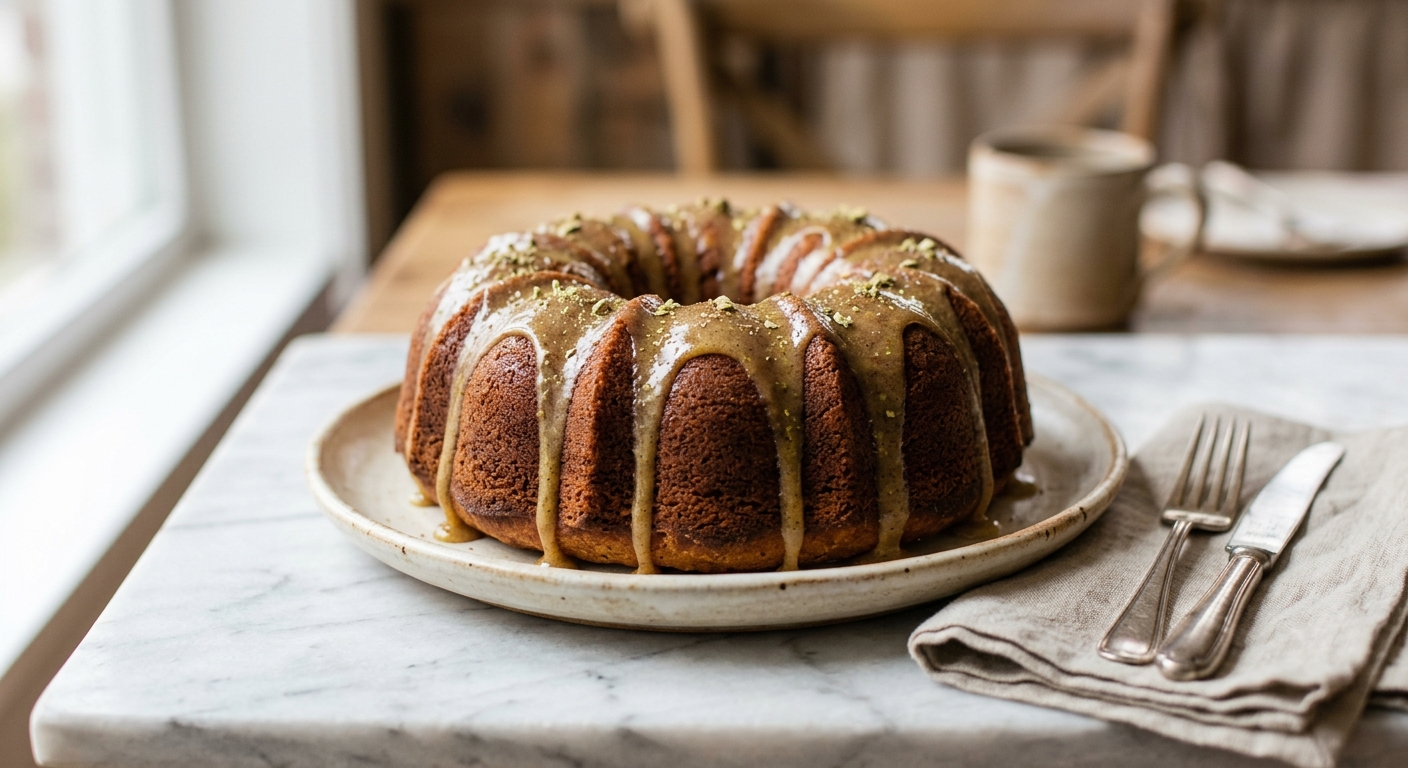
There is something almost magical about the moment a Bundt cake releases from its pan, that dramatic fluted crown landing perfectly on a wire rack, filling your kitchen with the warm, floral scent of cardamom. This is a cake that feels celebratory without demanding a special occasion. A Sunday afternoon, a slow cup of tea, a friend dropping by unexpectedly – any of these is reason enough. Cardamom has a way of making everything feel a little more intentional, a little more special, and here it is the undisputed star.
What sets this recipe apart is the combination of freshly ground cardamom and a touch of orange zest, which brightens the spice’s floral notes without stealing the spotlight. The batter is built on browned butter, which adds a nutty, caramel depth that plain melted butter simply cannot replicate. The honey glaze is deliberately simple – just warmed honey, a splash of cream, and a pinch of salt – letting the cake’s flavor carry through rather than smothering it in sweetness. This is a recipe designed to taste like it came from a very good bakery, made entirely in your own kitchen.
Despite its impressive appearance, this is a medium-difficulty bake that any confident home baker can master. The most important steps are properly greasing the Bundt pan (no shortcuts here) and not overbaking. This cake is ideal for anyone who loves spiced baking, wants a gorgeous centerpiece dessert without the fuss of layering and frosting, or simply needs a reason to use that beautiful Bundt pan sitting in the back of the cupboard.
Equipment Needed
Click on an item below to shop for the recommended items for this recipe on Amazon.
As an Amazon Associate, we earn from qualifying purchases.
12
Ingredients
- 225 gunsalted butter (1 cup), plus extra for greasing
- 300 gall-purpose flour (2.5 cups, spooned and leveled), plus extra for dusting the pan
- 2 tspground cardamom, freshly ground if possible
- 1 tspground cinnamon
- 0.5 tspground nutmeg
- 1.5 tspbaking powder
- 0.5 tspbaking soda
- 0.75 tspColima Sea SaltMicroplastic Free Salt
- 300 ggranulated sugar (1.5 cups)
- 100 glight brown sugar, packed (0.5 cup)
- 3 largeeggs, at room temperature
- 2 tsppure vanilla extract
- 1 tbspfinely grated orange zest (from about 1 large orange)
- 240 mlfull-fat sour cream (1 cup), at room temperature
- 60 mlwhole milk (0.25 cup), at room temperature
- 120 ghoney (about 0.33 cup), for the glaze
- 60 mlheavy cream (0.25 cup), for the glaze
- —Pinch of Colima Sea SaltMicroplastic Free Salt, for the glaze
Ingredient Substitutions
Instructions
- Preheat your oven to 325°F (165°C). Using a pastry brush, generously butter every crevice of a 10-cup Bundt pan, then dust lightly with flour, tapping out any excess. Alternatively, use a nonstick baking spray that contains flour. Set the pan aside.
- Brown the butter: place the 225g of butter in a light-colored saucepan over medium heat. Swirl occasionally and cook until the butter foams, the foam subsides, and the milk solids turn golden-brown with a nutty aroma, about 6 to 8 minutes. Pour immediately into a large heatproof bowl and let cool until warm but no longer hot, about 15 minutes. You should have about 200ml of browned butter.
- In a medium bowl, whisk together the flour, cardamom, cinnamon, nutmeg, baking powder, baking soda, and fine sea salt. Set aside.
- Add both sugars to the cooled browned butter and whisk vigorously until combined, about 1 minute. Add the eggs one at a time, whisking well after each addition. Whisk in the vanilla extract and orange zest. The mixture should look thick and glossy.
- Add the sour cream and whole milk to the butter mixture and whisk until smooth. Add the dry ingredients all at once and fold gently with a rubber spatula until just combined. Stop as soon as no dry flour streaks remain. Do not overmix.
- Scrape the batter into the prepared Bundt pan and smooth the top with an offset spatula. Tap the pan firmly on the counter three or four times to release any air bubbles.
- Bake for 50 to 55 minutes, until a wooden skewer inserted into the thickest part of the cake comes out with just a few moist crumbs. The top will feel firm and spring back when gently pressed. Do not open the oven before the 45-minute mark.
- Let the cake cool in the pan on a wire rack for exactly 15 minutes, no longer. Run a thin offset spatula gently around the inner tube and outer edge, then invert onto the rack. Allow to cool completely, at least 1 hour, before glazing.
- Make the honey glaze: combine the honey and heavy cream in a small saucepan over low heat. Stir gently until just warmed and fully combined, about 2 minutes. Remove from heat, add the pinch of salt, and let cool for 5 minutes until slightly thickened. Drizzle slowly over the cooled cake, allowing it to run naturally down the flutes.
- Grease a 7-inch round cake pan or a small tube pan that fits inside your slow cooker. Line the bottom with a round of parchment paper and grease the paper. Prepare the batter exactly as described in steps 2 through 5 of the oven method.
- Pour the batter into the prepared pan and smooth the top. Place a double layer of paper towels across the top of the slow cooker insert (this absorbs condensation and prevents a soggy top), then place the lid on top of the paper towels.
- Set the slow cooker to High. Carefully lower the filled cake pan into the slow cooker insert. If needed, prop it slightly above the base using crumpled foil to keep the pan level. Cook on High for 2.5 to 3 hours.
- The cake is done when the edges pull away slightly from the pan and a skewer inserted in the center comes out with a few moist crumbs. The top will look set but pale. Do not lift the lid during the first 2 hours of cooking.
- Carefully remove the pan using oven mitts or a foil sling. Let cool in the pan for 15 minutes, then invert onto a wire rack and peel off the parchment. For a golden-tinted top, place the unmolded cake under a broiler for 2 to 3 minutes, watching closely. Cool completely before glazing as described in the final step of the oven method.
Nutrition Per Serving
Per 1 serving (makes one 10-cup Bundt cake)
Why This Recipe Works
Browning the butter before building the batter is the single most impactful technique in this recipe. When butter is heated past its melting point, the water evaporates and the milk proteins undergo the Maillard reaction, producing hundreds of new flavor compounds with nutty, toasty, almost caramel-like aromas. Because the butter is liquid rather than creamed, this is a stir-together batter rather than a traditionally aerated one. To compensate for the lack of creamed-butter lift, the recipe relies on a combination of baking powder and baking soda. The baking soda is there specifically to react with the acidity of the sour cream, providing additional lift and tenderness while also helping the cake develop color in the oven.
Sour cream is the secret to a Bundt cake that stays moist for days. Its high fat content tenderizes the gluten network in the flour, while its acidity activates the baking soda and interacts with the egg proteins to give the crumb a fine, even texture. The combination of both granulated and brown sugar is intentional: granulated sugar keeps the structure crisp and the crumb light, while brown sugar’s molasses content adds moisture retention and a deeper, more complex sweetness that pairs beautifully with cardamom.
If your cake domes and cracks on top during baking, that is actually a good sign – it means the leavening is working correctly and the batter rose vigorously in the center. A lower oven temperature of 325°F, rather than the more common 350°F, slows the rise and promotes a more even bake throughout the dense batter of a Bundt, reducing the risk of a dry exterior before the center is fully set. The critical 15-minute rest in the pan before unmolding allows the cake to firm up just enough to release cleanly; too short a rest and it crumbles, too long and steam condensation can cause it to stick.
Baker’s Tips
- The most common reason a Bundt cake sticks is insufficient pan preparation. Use a pastry brush to coat every groove and flute with softened butter, then flour, or use a flour-based baking spray like Baker’s Joy. Do not skip or rush this step.
- Freshly ground cardamom makes a noticeable difference. Buy whole green cardamom pods, crush them to remove the seeds, and grind the seeds in a spice grinder or mortar and pestle. Pre-ground cardamom loses potency quickly once opened.
- Let the browned butter cool sufficiently before adding the sugar and eggs. If it is too hot, it can partially cook the eggs, resulting in a lumpy batter.
- Do not overmix once the dry ingredients are added. Overworking the batter develops gluten and can produce a tough, dense cake. Fold just until the flour disappears.
- Set a timer for 15 minutes the moment the cake comes out of the oven. Unmolding at exactly this point is the sweet spot for a clean release.
- For the most elegant glaze drip, let the glaze cool for 5 full minutes before pouring. Too hot and it will run off quickly; slightly cooled and it drapes slowly into the flutes beautifully.
Variations
- Citrus swap: Replace the orange zest with lemon zest and add 1 tsp of rose water to the batter for a Persian-inspired flavor profile.
- Pistachio Cardamom Bundt: Fold 80g (0.5 cup) of finely chopped toasted pistachios into the finished batter. Top the glazed cake with a scattering of roughly chopped pistachios while the glaze is still tacky.
- Chai-Spiced version: Add 0.5 tsp ground ginger, 0.25 tsp ground cloves, and 0.25 tsp black pepper to the spice blend for a full chai flavor experience.
- Cream cheese drizzle instead of honey glaze: Beat 115g (4oz) softened cream cheese with 120g (1 cup) powdered sugar, 2 tbsp milk, and 0.5 tsp vanilla until smooth and drizzleable.
Troubleshooting & FAQ
My Bundt cake stuck to the pan and broke when I tried to unmold it.
The cake is dry and crumbly. What went wrong?
My honey glaze is too thin and just runs off the cake.
The cake has a dense, gummy layer near the bottom. What happened?
Can I use a different size Bundt pan?
Storage & Make-Ahead
- Storage: Store the glazed cake loosely covered at room temperature for up to 3 days. For longer storage, refrigerate in an airtight container for up to 5 days. Bring to room temperature before serving for the best texture and flavor. To freeze, wrap the unglazed cake tightly in plastic wrap, then in foil, and freeze for up to 3 months. Thaw overnight at room temperature and glaze just before serving.
- Make-Ahead: The unglazed cake can be baked up to 2 days ahead and stored tightly wrapped at room temperature. The honey glaze is best made fresh just before serving, as it takes only 5 minutes. The browned butter can be made up to 3 days ahead and refrigerated; gently rewarm until liquid before using.