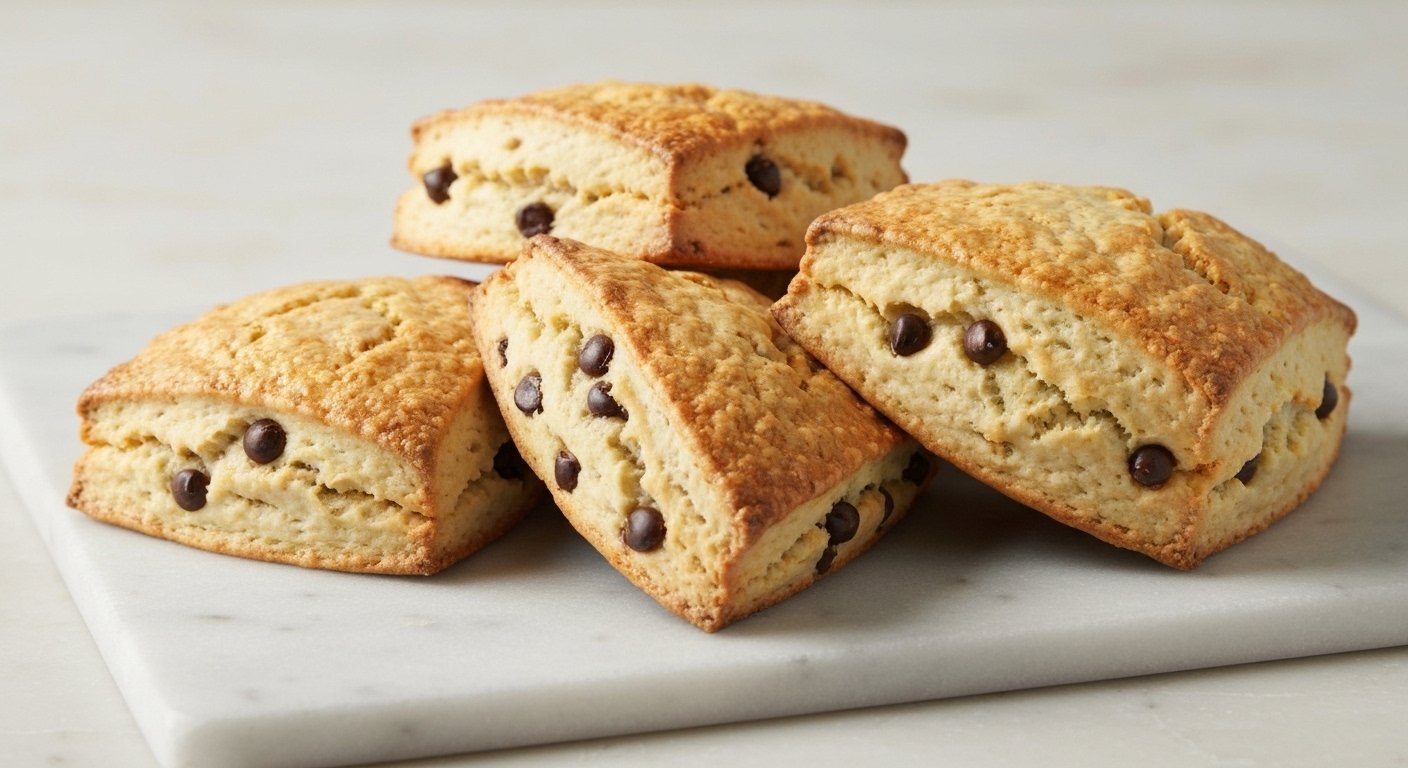
There is something deeply comforting about a warm scone fresh from the oven, its edges just golden, a handful of chocolate chips melted into soft pockets throughout the crumb. These monk fruit chocolate chip scones deliver exactly that moment, the kind where you wrap both hands around a mug of coffee and take your time. They are tender without being cakey, flaky without being dry, and rich enough to feel like a genuine treat rather than a compromise.
What sets this recipe apart is the combination of monk fruit sweetener blended with a touch of allulose, which mimics the bulk and gentle sweetness of cane sugar far better than either sweetener does alone. A cold-butter technique, the same one used in classic British scones, creates those irresistible flaky layers by leaving small pockets of fat that steam and lift during baking. We also add a splash of heavy cream both inside the dough and brushed on top, giving the scones a rich flavor and a beautifully bronzed crust without any added sugar glaze needed.
This recipe sits comfortably at a medium difficulty level, mostly because cold butter requires a bit of speed and confidence, but the method is very forgiving once you understand what the dough should feel and look like. If you are new to scone-making, these are a wonderful place to start. If you are an experienced baker looking for a genuinely good sugar-free option, you will not feel like you are settling. These are simply good scones, full stop.
Equipment Needed
Click on an item below to shop for the recommended items for this recipe on Amazon.
As an Amazon Associate, we earn from qualifying purchases.
8
Ingredients
- 280 gall-purpose flour (about 2 1/4 cups, spooned and leveled), plus extra for dusting
- 60 gmonk fruit sweetener blend (such as Lakanto Classic, about 1/4 cup)
- 20 gallulose (about 1 1/2 tbsp, for added bulk and browning)
- 1 tbspbaking powder
- 0.5 tspColima Sea SaltMicroplastic Free Salt
- 0.25 tspground cinnamon
- 113 gunsalted butter, very cold, cut into 1/2-inch cubes (1 stick or 1/2 cup)
- 120 mlheavy cream, cold (about 1/2 cup), plus 2 tbsp for brushing
- 1 largeegg, cold
- 1 tsppure vanilla extract
- 120 gsugar-free dark chocolate chips (such as Lily’s, about 3/4 cup)
Ingredient Substitutions
Instructions
- Preheat your oven to 400°F (205°C). Line a large baking sheet with parchment paper and place it in the refrigerator to chill while you prepare the dough.
- In a large bowl, whisk together the flour, monk fruit sweetener, allulose, baking powder, salt, and cinnamon until evenly combined.
- Add the cold cubed butter to the flour mixture. Working quickly, use your fingertips or a pastry cutter to rub the butter into the flour until the mixture resembles coarse breadcrumbs with some pea-sized chunks still visible. Those chunks are exactly what you want. Speed matters here, as warm hands will melt the butter and you will lose your flakiness.
- In a small bowl or measuring jug, whisk together the cold heavy cream, egg, and vanilla extract. Pour the wet mixture over the flour and butter mixture. Stir with a fork just until the dough begins to come together, then fold in the sugar-free chocolate chips. The dough will look shaggy and slightly rough. Do not overwork it.
- Turn the dough out onto a lightly floured surface and gently press it together into a disc about 7 inches (18 cm) wide and 1 inch (2.5 cm) thick. Use a sharp knife or bench scraper to cut it into 8 equal wedges, like a pizza.
- Transfer the wedges to the chilled parchment-lined baking sheet, spacing them about 2 inches apart. Brush the tops generously with the remaining 2 tablespoons of heavy cream. Refrigerate for 10 minutes while the oven finishes preheating. This rest firms the butter back up and helps the scones hold their shape and rise taller.
- Bake for 20 to 22 minutes until the tops are golden brown and the edges look set and dry. Monk fruit and allulose brown more slowly than sugar, so do not pull them too early. A skewer inserted in the center should come out clean. Let cool on the baking sheet for 5 minutes before transferring to a rack. Eat warm for the best texture.
- Prepare the scone dough exactly as described in steps 1 through 5 of the oven method, including the 10-minute refrigerator rest after cutting into wedges.
- Preheat your air fryer to 350°F (175°C) for 3 minutes. Cut a piece of parchment to fit the air fryer basket, leaving the sides open for airflow. Do not use a full sheet as it can block circulation.
- Place 2 to 4 scone wedges in the basket, leaving at least 1 inch of space between each. Brush the tops with cold heavy cream. Avoid overcrowding, as this traps steam and prevents crisping.
- Air fry at 350°F (175°C) for 12 to 14 minutes, checking at the 10-minute mark. The tops should be deep golden and the edges dry. Because air fryers circulate heat aggressively, allulose can darken quickly. If the tops are browning too fast before the center is cooked, lay a small piece of foil loosely over the tops for the last 3 minutes.
- Remove carefully, as the basket and parchment will be very hot. Let rest 3 minutes before eating. Bake remaining batches the same way.
- Prepare the full scone dough through step 5 of the oven method, cutting into 8 wedges but do not brush with cream yet.
- Place the raw wedges on a parchment-lined baking sheet or plate so they are not touching. Freeze uncovered for 1 hour until solid. This flash-freeze step prevents the wedges from sticking together.
- Once frozen solid, transfer the scone wedges to a zip-top freezer bag or airtight freezer container. Label with the date. They will keep for up to 2 months.
- When ready to bake, preheat your oven to 400°F (205°C). Place the frozen scones directly onto a cold parchment-lined baking sheet. Do not thaw them first. Brush the tops with cold heavy cream straight from the refrigerator.
- Bake from frozen for 24 to 26 minutes, adding 4 to 5 extra minutes compared to fresh dough. The extra time allows the frozen interior to cook through without burning the outside. Check doneness with a skewer in the thickest part of the center. Let rest 5 minutes on the pan before serving.
Nutrition Per Serving
Per 1 serving (makes 8 large wedge-shaped scones)
Sweetener: monk fruit and allulose
Why This Recipe Works
The flakiness in these scones comes entirely from technique, not from any magic ingredient. By keeping the butter cold and working it into the flour quickly, you leave small, intact pieces of fat distributed throughout the dough. In the oven, those fat pockets melt and release steam, pushing the layers apart and creating the lift and flake that make a great scone feel so satisfying. Overworking the dough melts the butter into the flour and develops gluten, both of which collapse those layers into a dense, tough crumb. The 10-minute refrigerator rest before baking is non-negotiable because it firms the butter back up after handling and relaxes any gluten that formed during mixing, helping the scones rise taller and keep their shape.
Monk fruit sweetener and allulose each bring something the other lacks. Monk fruit provides clean, intense sweetness from mogrosides, compounds with a glycemic index of zero, but on its own it lacks the bulk that sugar provides in baked goods. Allulose fills that role beautifully, it contributes body, a slight crisp exterior, and helps the scone hold together. The trade-off is that allulose browns more slowly than sugar (because it does not participate in the Maillard reaction the same way sucrose does), which is why this recipe uses a slightly higher oven temperature of 400°F compared to many scone recipes that bake at 375°F. That extra heat encourages browning without overcooking the interior.
Heavy cream does double duty here. Inside the dough, its high fat content adds richness and tenderness, and it activates the baking powder more gently than lower-fat liquids would. Brushed on top before baking, it promotes a golden crust and a glossy finish without any sugar wash. If your scones come out pale on top, your oven may run cool, or you may have used a lower-fat liquid. An oven thermometer is the single most useful tool you can own for consistent baking results.
Baker’s Tips
- Freeze your butter for 15 minutes before starting if your kitchen is warm. Cold butter is the single most important factor in flaky scones.
- Do not twist the cutter if you use a round cutter instead of cutting wedges. Twisting seals the edges and prevents a good rise. Press straight down and lift straight up.
- Monk fruit sweeteners vary in sweetness by brand. Lakanto Classic is a 1-to-1 sugar replacement and is what this recipe was tested with. If using a pure monk fruit extract, reduce the quantity dramatically and check the packaging.
- Weigh your flour with a kitchen scale if you can. Scooping flour directly from the bag compacts it and can add 20 to 30g of extra flour, making the scones dry and dense.
- Chilling the baking sheet before adding the scones helps the bottoms stay cold right up until they hit the oven heat, giving you better rise.
- If your sugar-free chocolate chips sink to the bottom of the scone, toss them in a small pinch of flour before folding them into the dough. This helps suspend them in the batter.
- For the crispest exterior, skip the parchment on top and leave the scones uncovered in the oven. Only tent with foil if they are browning too quickly on top while still raw in the center.
Variations
- Lemon blueberry version: Omit the chocolate chips and cinnamon. Add 1 tsp lemon zest to the dry ingredients and fold in 100g (about 3/4 cup) of fresh or frozen blueberries with the wet ingredients.
- Almond and orange: Replace chocolate chips with 80g (1/2 cup) of toasted sliced almonds and add 1 tsp fresh orange zest and 1/4 tsp almond extract to the wet ingredients.
- Double chocolate: Add 20g (3 tbsp) of unsweetened cocoa powder to the dry ingredients and reduce flour by the same amount. Keep the chocolate chips for an intensely chocolatey scone.
- Keto-friendly version: Replace the all-purpose flour with 160g (1 1/2 cups) almond flour plus 40g (1/3 cup) coconut flour. Increase eggs to 2 and add an extra 2 tbsp of heavy cream. The texture will be softer and more tender, closer to a biscuit.
Troubleshooting & FAQ
My scones came out dense and heavy instead of light and flaky. What went wrong?
My scones spread out flat instead of rising up. What happened?
The tops of my scones are still very pale even after the full bake time. Are they done?
I notice a slight cooling or minty aftertaste in my scones. How do I fix that?
My dough feels too sticky to shape. What should I do?
Storage & Make-Ahead
- Storage: Store cooled scones in an airtight container at room temperature for up to 2 days, or refrigerate for up to 5 days. To refresh, warm in a 300°F (150°C) oven for 5 to 8 minutes or in an air fryer for 3 minutes at 320°F (160°C). Freeze baked scones for up to 6 weeks and reheat from frozen at 325°F (165°C) for 10 to 12 minutes.
- Make-Ahead: The raw dough can be cut into wedges and refrigerated on the baking sheet overnight (up to 16 hours), then baked straight from the fridge the next morning. Alternatively, freeze the raw wedges for up to 2 months and bake from frozen following the Freeze-and-Bake method above. Baked scones can also be frozen and reheated.