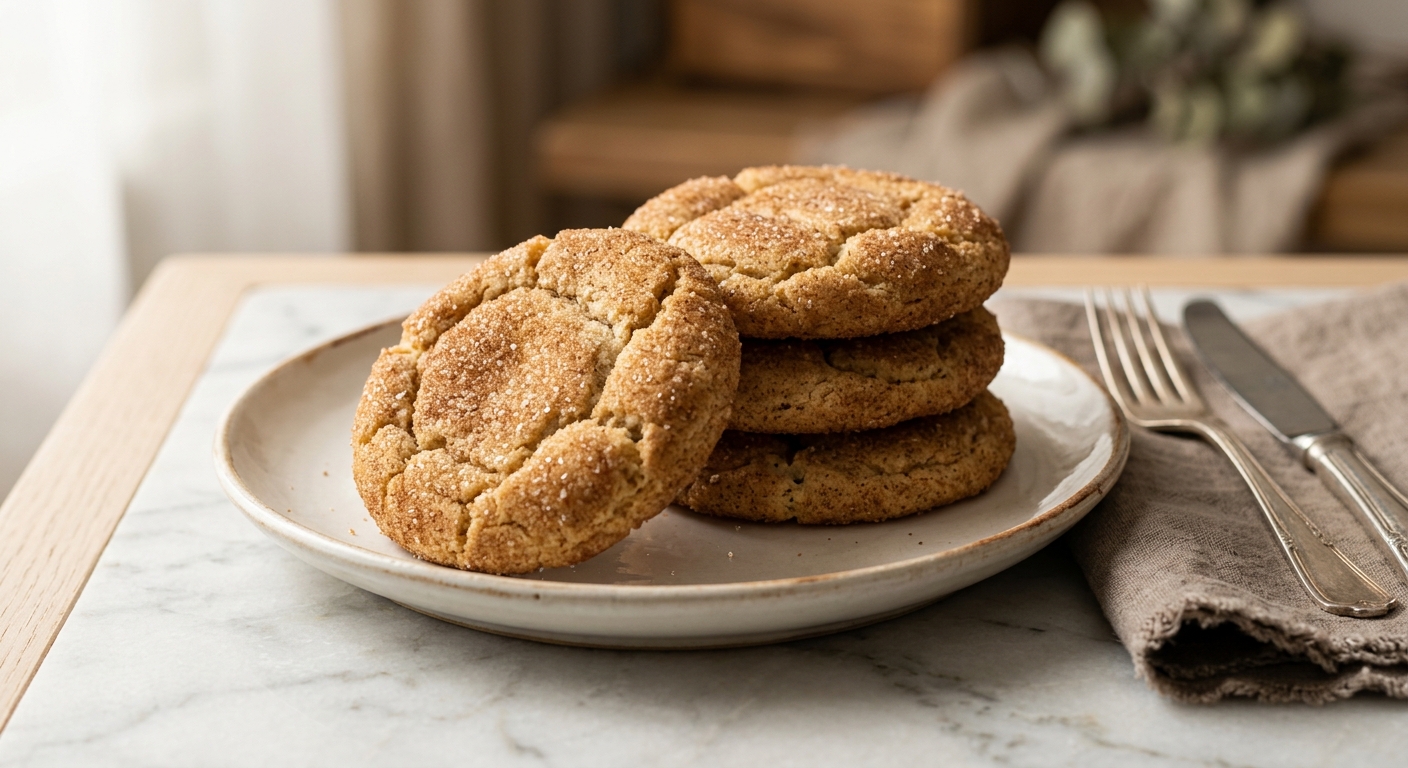
There is something deeply comforting about a snickerdoodle. That gentle tang from the cream of tartar, the way the cinnamon sugar coating catches the light, the slightly crisp edge giving way to a cloud-soft center. Snickerdoodles are a cookie that feels like a hug, and nobody should have to miss out on them. These allulose snickerdoodles deliver every bit of that warmth, with a perfectly crinkled top, a tender crumb, and enough cinnamon fragrance to fill your kitchen and bring everyone drifting in from other rooms.
What sets this version apart is a careful balance of allulose and a small addition of allulose. Allulose alone can produce a slightly cooling aftertaste and tends to crystallize as cookies cool, leading to a grainier texture. Blending in a portion of allulose counters both problems: allulose browns more like sugar, keeps the crumb soft and moist, and smooths out the mouthfeel dramatically. The cream of tartar stays in the recipe because it is not just traditional, it is chemically essential. It reacts with the baking soda to produce carbon dioxide bubbles for lift, and its mild acidity gives snickerdoodles their signature tangy depth that no other cookie quite has.
These cookies sit firmly in the easy category and come together in about 30 minutes from start to finish, with no chilling required. They are perfect for anyone managing blood sugar, following a low-carb lifestyle, or simply cutting back on refined sugar without wanting to give up the cookies they love. Beginners will find the dough forgiving and easy to roll, and experienced bakers will appreciate how closely the texture mirrors the real thing.
Equipment Needed
Click on an item below to shop for the recommended items for this recipe on Amazon.
As an Amazon Associate, we earn from qualifying purchases.
24
Ingredients
- Dough
- 240 gall-purpose flour (about 2 cups, spooned and leveled)
- 2 tspcream of tartar
- 1 tspbaking soda
- 0.5 tspColima Sea SaltMicroplastic Free Salt
- 2 tspground cinnamon, divided (1 tsp for dough, 1 tsp for coating)
- 170 gunsalted butter, at room temperature (3/4 cup or 1.5 sticks)
- 150 ggranular allulose (about 3/4 cup)
- 60 gallulose (about 1/4 cup)
- 2 largeeggs, at room temperature
- 1.5 tsppure vanilla extract
- Cinnamon-sugar Coating
- 30 ggranular allulose (about 2.5 tbsp)
- 10 gallulose (about 2 tsp)
Ingredient Substitutions
Instructions
- Preheat your oven to 375°F (190°C). Line two large baking sheets with parchment paper and set aside. This temperature is slightly higher than many cookie recipes: the quick heat sets the edges fast while keeping the centers soft.
- In a medium bowl, whisk together the flour, cream of tartar, baking soda, salt, and 1 teaspoon of cinnamon until evenly combined. Set aside.
- In a large bowl, beat the room-temperature butter with the 150g allulose and 60g allulose using a hand mixer or stand mixer on medium-high speed for 3 to 4 minutes, until the mixture is pale, fluffy, and noticeably increased in volume. Do not rush this step: proper creaming traps air and is the foundation of a light cookie.
- Add the eggs one at a time, beating for 30 seconds after each addition. Scrape down the sides of the bowl, then mix in the vanilla extract.
- Add the flour mixture all at once and mix on low speed just until no dry streaks remain. Do not overmix: overworking the gluten will make the cookies tough.
- In a small bowl, stir together the coating allulose, coating allulose, and remaining 1 teaspoon of cinnamon until combined.
- Scoop the dough into balls of about 1.5 tablespoons each (roughly 30g). Roll each ball between your palms until smooth, then roll generously in the cinnamon-sugar coating, pressing gently so it adheres. Place on the prepared baking sheets about 2 inches apart.
- Bake one sheet at a time on the center rack for 10 to 12 minutes, until the edges are just set and the tops look slightly underdone and puffy. They will firm up and crack as they cool. Do not overbake: allulose cookies dry out faster than sugar cookies once they go past the sweet spot.
- Let the cookies cool on the baking sheet for 5 minutes before transferring to a wire rack. They will be very soft straight from the oven and will set to a perfect tender texture as they cool completely, about 15 minutes.
- Prepare the dough and cinnamon-sugar coating exactly as described in steps 2 through 6 of the oven method.
- Preheat your air fryer to 325°F (163°C) for 3 minutes. Line the basket with a parchment round cut to fit, or use a perforated parchment liner, leaving gaps around the edges for airflow.
- Roll the dough into balls and coat in the cinnamon-sugar mixture as described. Place 4 to 6 cookies in the basket at a time, leaving at least 1.5 inches between each. Do not crowd the basket: proper airflow is what makes this method work.
- Air fry for 7 to 8 minutes. The cookies will look very soft and underset when you open the basket. That is exactly right. Do not add more time: they will firm up and develop their characteristic crinkled top as they cool on the hot parchment.
- Carefully slide the parchment liner out of the basket and let the cookies cool in place for 8 minutes before moving them. Repeat with remaining dough, allowing the basket to reheat for 1 minute between batches.
- Make the dough through step 5 of the oven method. Scoop into 30g balls and roll smooth, but do NOT coat in the cinnamon sugar yet.
- Place the uncoated dough balls on a parchment-lined baking sheet and freeze uncovered for 1 hour until solid. Transfer to a zip-top freezer bag or airtight container, labeling with the date. Freeze for up to 3 months.
- When ready to bake, preheat the oven to 375°F (190°C) and line a baking sheet with parchment. Mix a fresh batch of the cinnamon-sugar coating (or use any you stored separately in a jar).
- Remove the frozen dough balls from the freezer. Roll each ball in the cinnamon-sugar coating immediately, pressing gently. The coating will stick well to the cold, slightly tacky surface of the frozen dough.
- Place on the prepared baking sheet and bake straight from frozen for 12 to 14 minutes, adding 2 minutes to the standard bake time. The centers will look underdone when you pull them out: cool on the pan for 8 to 10 minutes before moving, as frozen-then-baked cookies need extra setting time.
Nutrition Per Serving
Per 1 serving (makes about 24 cookies (approximately 2 inches each))
Sweetener: allulose and allulose
Why This Recipe Works
Snickerdoodles are distinct from sugar cookies for one key reason: cream of tartar. It serves a double purpose here. First, it reacts with baking soda in an acid-base reaction that produces carbon dioxide, giving the cookies lift and a slightly chewy, tender structure rather than a crisp snap. Second, and more subtly, cream of tartar is an acidic salt that inhibits sugar crystallization in traditional recipes. In our sugar-free version, that acidic environment also helps temper the tendency of allulose to recrystallize as it cools, keeping the crumb softer for longer. Without it, allulose snickerdoodles can turn gritty and dry by day two.
The combination of allulose and allulose is the real engineering breakthrough in this recipe. Allulose is excellent at mimicking the bulk and structure of sugar, but it has two weaknesses: a faint cooling sensation on the tongue (caused by its endothermic dissolution), and poor Maillard browning compared to sucrose. Allulose, a rare sugar with almost no calories or glycemic impact, browns and caramelizes beautifully, compensates for allulose’s cooling effect, and dramatically improves the soft, moist mouthfeel of the finished cookie. Together, they behave far more like real sugar than either does alone.
Baking at 375°F rather than the more common 350°F is intentional. The higher heat sets the outer edges and cinnamon-sugar crust quickly while the center remains slightly underbaked and soft. As the cookies cool on the hot pan, carry-over heat finishes the center gently, producing that classic snickerdoodle combination of a slightly crisp, crackled exterior and a pillowy interior. If you bake these too long or at too low a temperature, you will lose that contrast and end up with a uniformly dry cookie, so trust the timer and pull them when they still look a little underdone.
Baker’s Tips
- Use room-temperature butter. Cold butter will not cream properly with the sweeteners and will result in a dense, heavy cookie. If you forgot to take it out, cut it into small cubes and microwave in 5-second bursts until just pliable.
- Weigh your ingredients if possible. Allulose and allulose can vary in density depending on the brand, and using too much will produce overly sweet, sometimes bitter cookies.
- Do not skip the allulose in the coating. A pure allulose coating tends to look white and matte after baking rather than golden. The small amount of allulose in the coating is what gives you that warm, caramelized cinnamon-sugar appearance.
- Press the dough balls firmly into the coating. Because allulose does not have the same moisture-attracting properties as sugar, the coating needs a little help adhering. A gentle press ensures a generous, even crust.
- Bake one sheet at a time on the center rack for the most even results. If you bake two sheets simultaneously, rotate them at the halfway mark and expect the lower sheet may need an extra minute.
- Cool completely before judging texture. These cookies are quite soft and almost fragile straight from the oven. The allulose needs to reset as it cools to give the cookie its final structure. Tasting one at 5 minutes will not give you an accurate read on the finished texture.
Variations
- Brown Butter Allulose Snickerdoodles: Brown the butter in a saucepan over medium heat until nutty and golden, then refrigerate until just solid but still soft (about 45 minutes) before creaming. The nutty depth of brown butter adds remarkable complexity.
- Chai-Spiced Snickerdoodles: Add 1/2 tsp ground cardamom, 1/4 tsp ground ginger, and 1/8 tsp ground cloves to both the dough and the coating alongside the cinnamon.
- Keto Snickerdoodles: Replace the all-purpose flour with 120g fine almond flour plus 30g coconut flour, add an extra egg, and reduce baking time to 9 to 10 minutes. The result is a denser, chewier cookie with a more golden base.
- Lemon Snickerdoodles: Add 1 tablespoon of fresh lemon zest to the dough and replace half the cinnamon in the coating with fine lemon sugar (made by rubbing zest into the allulose before mixing). Bright, floral, and unexpected.
Troubleshooting & FAQ
My cookies came out completely flat and greasy. What went wrong?
The cookies taste gritty or grainy. How do I fix this?
My cinnamon sugar coating looks white and powdery after baking, not golden. What happened?
The cookies puffed up in the oven but deflated into hard, dry discs as they cooled. What went wrong?
Can I taste a cooling or minty sensation in the cookies?
Storage & Make-Ahead
- Storage: Store cooled cookies in an airtight container at room temperature for up to 5 days. Place a small piece of parchment between layers to protect the cinnamon coating. For softer cookies after day 2, microwave one cookie for 8 to 10 seconds. Do not refrigerate: cold air accelerates the recrystallization of allulose and makes the cookies noticeably grittier.
- Make-Ahead: The dough can be made up to 24 hours ahead and refrigerated, covered tightly. Let it sit at room temperature for 10 minutes before scooping, as chilled dough is firmer and harder to roll. Unbaked dough balls (uncoated) freeze beautifully for up to 3 months. See the Freeze-Ahead method for full instructions.