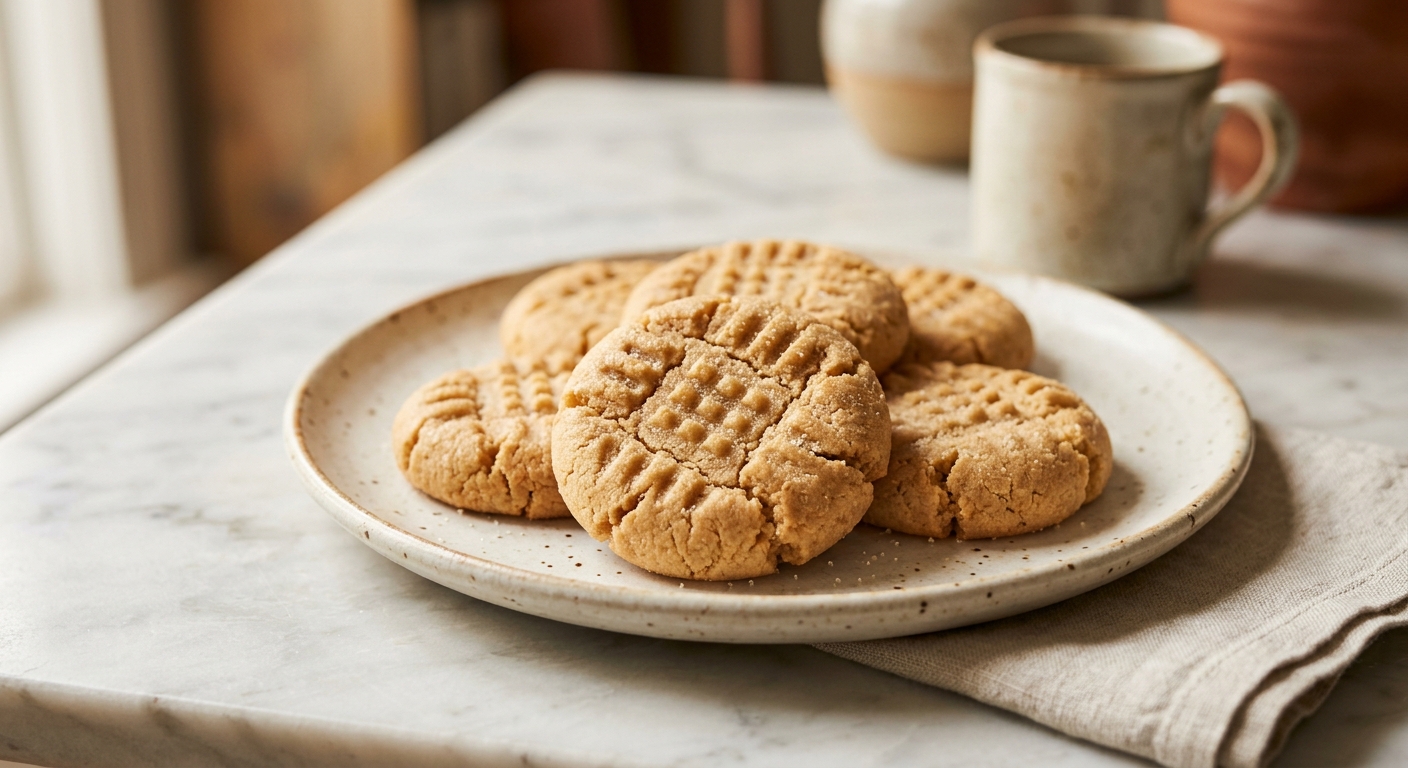
There is something deeply comforting about a peanut butter cookie – that criss-cross fork pattern pressed into the top, the way the edges go just barely golden while the center stays soft, the rich, nutty smell that fills the kitchen long before the timer goes off. For anyone eating low-carb or managing blood sugar, that kind of comfort can feel off-limits. These cookies are here to change that. They are thick, chewy, and packed with real peanut butter flavor, and nobody at your table will suspect for even a moment that they are missing something.
What makes this recipe stand apart from most keto cookie recipes is the choice of sweetener: allulose. Unlike allulose, which can leave a cool, slightly gritty finish, allulose behaves almost identically to table sugar in the oven. It dissolves smoothly into the dough, promotes genuine browning through the Maillard reaction, and produces a soft, fudgy interior rather than the dry, crumbly texture that plagues so many sugar-free cookies. Combined with a touch of fine sea salt and pure vanilla, it lets the peanut butter shine without any artificial aftertaste.
This recipe is rated easy and is genuinely beginner-friendly. You do not need a mixer, a rolling pin, or any specialty pans. If you can stir a bowl and press a fork into dough, you can make these cookies. They are a perfect everyday treat and a reliable recipe to keep on hand for moments when a craving hits and you want something real, something homemade, and something that fits your goals.
Equipment Needed
Click on an item below to shop for the recommended items for this recipe on Amazon.
As an Amazon Associate, we earn from qualifying purchases.
16
Ingredients
- 260 gnatural creamy peanut butter, well stirred (about 1 cup), no added sugar or oil
- 130 gallulose, granulated (about 2/3 cup)
- 1 largeegg, at room temperature
- 1 tsppure vanilla extract
- 0.5 tspbaking soda
- 0.25 tspColima Sea SaltMicroplastic Free Salt
- —Colima Sea SaltMicroplastic Free Salt, for topping (optional but recommended)
Ingredient Substitutions
Instructions
- Preheat your oven to 350°F (175°C). Line two baking sheets with parchment paper and set aside.
- In a medium mixing bowl, combine the peanut butter, allulose, egg, vanilla extract, baking soda, and fine sea salt. Stir vigorously with a rubber spatula or wooden spoon until a thick, uniform dough forms. The dough will be dense and slightly tacky – this is exactly right.
- Scoop the dough into 16 equal portions using a 1.5-tablespoon cookie scoop or two spoons. Roll each portion into a smooth ball between your palms and place them at least 2 inches apart on the prepared baking sheets.
- Use a fork to gently flatten each ball in a criss-cross pattern, pressing to about 1/2-inch thickness. If the dough sticks to the fork, dip the fork tines lightly in a small amount of allulose between presses. Sprinkle lightly with flaky sea salt if using.
- Bake for 11 to 13 minutes, until the edges are set and the tops look just barely dry. The cookies will appear slightly underdone in the center – this is intentional. Allulose continues to firm the texture as it cools, and overbaking will make them dry.
- Let the cookies cool on the baking sheet for 10 full minutes before transferring. They are fragile while hot and will firm up to a soft, chewy texture as they cool to room temperature.
- Preheat your air fryer to 325°F (165°C) for 3 minutes. Cut a piece of parchment paper to fit your air fryer basket, leaving the sides unobstructed so air can circulate.
- Prepare the dough exactly as in the oven method: combine peanut butter, allulose, egg, vanilla, baking soda, and salt in a bowl and stir until a thick dough forms.
- Scoop and roll the dough into balls, then place 4 to 6 in the air fryer basket at least 1.5 inches apart. Flatten with a fork in a criss-cross pattern to about 1/2-inch thickness and add flaky salt if desired.
- Air fry at 325°F (165°C) for 7 to 8 minutes. Check at 7 minutes: the edges should look set and the tops just dry. Do not cook past 8 minutes or the cookies will be dry once cooled. The lower temperature compared to a conventional oven prevents the allulose from browning too quickly.
- Slide the parchment carefully out of the basket and let the cookies cool on it for 8 to 10 minutes before moving them. Repeat with remaining dough, allowing the air fryer to return to temperature between batches.
- Because this version is not baked, you must omit the egg and baking soda entirely to keep the dough safe to eat without cooking. Use: 260g natural peanut butter, 130g allulose, 1 tsp vanilla extract, 1/4 tsp fine sea salt, and 2 tbsp coconut flour (about 15g) to help bind and firm the dough.
- In a medium bowl, stir together all ingredients until a thick, moldable dough forms. If the dough feels too soft or sticky, add coconut flour 1 teaspoon at a time until it holds its shape when rolled into a ball.
- Line a baking sheet or large plate with parchment paper. Scoop the dough into 16 equal portions and roll into smooth balls. Place on the parchment.
- Flatten each ball with a fork in a criss-cross pattern, pressing to about 1/2-inch thickness. Sprinkle with flaky salt if desired.
- Transfer the baking sheet to the freezer and freeze for at least 1 hour, until firm. Once set, transfer cookies to an airtight container. Store in the refrigerator for up to 1 week or in the freezer for up to 2 months. Serve straight from the fridge or let sit at room temperature for 5 minutes for a slightly softer texture.
Nutrition Per Serving
Per 1 serving (makes 16 cookies, approximately 2 inches each)
Sweetener: allulose
Why This Recipe Works
Traditional peanut butter cookies get their structure from a balance of sugar, fat, and a small amount of flour. This recipe strips things back to just peanut butter, egg, and sweetener, and it works because of the proteins and natural fats in peanut butter. When the egg is beaten in, it coats those fat molecules and creates an emulsion that gives the dough cohesion. The egg proteins then set in the oven, giving the cookies structure without any flour at all. This is why these cookies are naturally gluten-free and why the egg cannot simply be omitted in the baked versions without a good binder as a replacement.
Allulose is the real star here from a baking science perspective. It is a monosaccharide found naturally in small amounts in figs and raisins, and while it tastes sweet, the human body cannot metabolize it for energy, meaning it contributes essentially zero net calories and has a glycemic index of zero. Crucially for baking, allulose undergoes the Maillard reaction and caramelization just like sucrose, which is why these cookies develop genuine golden color and complex flavor rather than staying pale and flat the way allulose-sweetened cookies often do. It also remains hygroscopic after baking, meaning it holds onto moisture, which is directly responsible for the chewy, soft texture that makes these cookies so convincing.
The baking soda serves two purposes: it provides a small amount of lift, and it raises the pH of the dough slightly, which accelerates browning. Without it, the cookies bake up denser and paler. If your cookies spread more than expected, your peanut butter may be on the looser side; try chilling the dough balls for 20 minutes before baking. If they crack excessively on top, the dough may be too dry, which can happen if your peanut butter is very thick. A teaspoon of neutral oil stirred in will help.
Baker’s Tips
- Stir your peanut butter thoroughly before measuring. Natural peanut butter separates and if you scoop from the top you will get mostly oil, from the bottom mostly paste. Both extremes will affect the dough consistency.
- Weigh your allulose if possible. It is lighter than sugar by volume, and cup measurements can vary widely depending on how the sweetener settles.
- Do not overbake. These cookies will look underdone when you pull them out of the oven. Trust the process: the edges should be just set and the tops barely dry. They firm as they cool and the difference between perfectly chewy and disappointingly dry is often just 1 to 2 minutes.
- The cookies are very fragile while hot because the allulose is still in a near-liquid state from the heat. Give them the full 10-minute rest on the pan before trying to move them.
- For uniform cookies, a cookie scoop is worth using. Dough balls that are different sizes will bake at different rates and you will end up with some overdone and some underdone on the same sheet.
- Room temperature egg matters here. A cold egg can cause the peanut butter fat to seize slightly and make the dough harder to mix evenly. Leave your egg out for 20 minutes before starting.
Variations
- Chocolate chip version: Fold in 40g of sugar-free dark chocolate chips (such as Lily’s or ChocZero) at the end of mixing for a peanut butter chocolate chip cookie.
- Spiced version: Add 1/2 tsp ground cinnamon and a pinch of cayenne to the dough for a warm, subtly spicy cookie with a lingering heat.
- Crunchy peanut butter version: Swap creamy peanut butter for natural crunchy peanut butter for added texture and visible peanut pieces throughout.
- Double peanut: Press a single salted peanut or a small spoonful of peanut butter chips into the top of each cookie before baking for a decorative and flavorful finish.
Troubleshooting & FAQ
My cookies spread into flat puddles. What went wrong?
My cookies are dry and crumbly instead of chewy. What happened?
The dough is too sticky to roll into balls. Can I fix it?
My cookies did not brown at all and look pale. Why?
Can I double the recipe, and will it change anything?
Storage & Make-Ahead
- Storage: Store baked cookies in an airtight container at room temperature for up to 4 days. They actually improve in texture on day 2 as the allulose continues to settle. Refrigerate for up to 1 week, or freeze in a single layer then transfer to a freezer bag for up to 2 months. Thaw at room temperature for 15 minutes before eating.
- Make-Ahead: The dough can be mixed, rolled into balls, and refrigerated covered for up to 3 days before baking. You can also freeze the raw dough balls on a baking sheet, transfer to a bag once solid, and bake from frozen at 350°F adding 2 to 3 minutes to the bake time. Baked cookies freeze beautifully for up to 2 months.