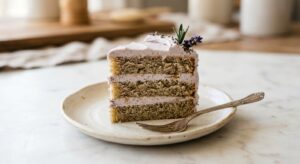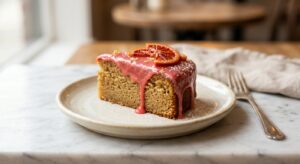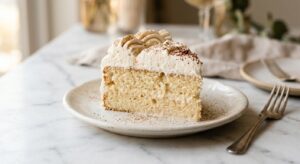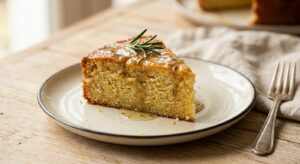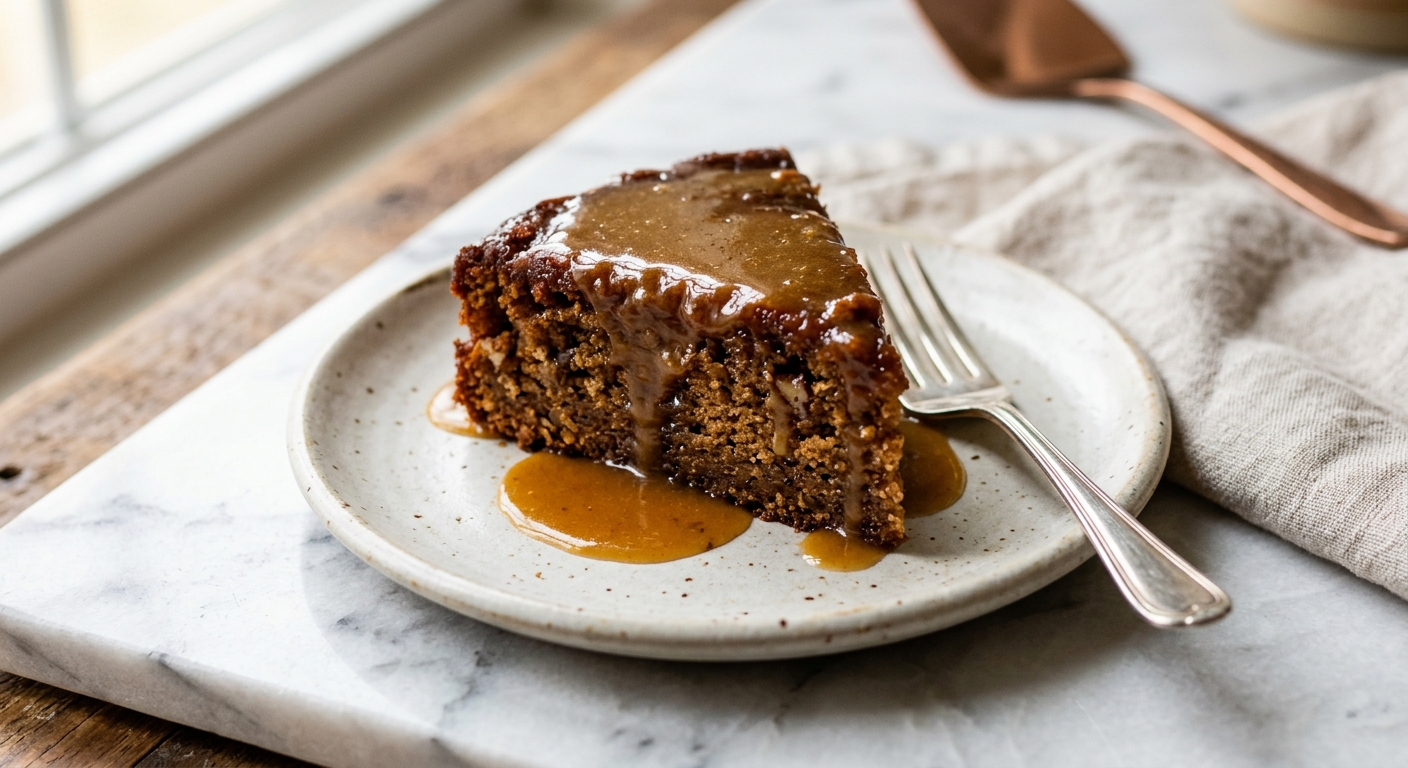
There is a moment, just after you pour the warm butter glaze over a freshly baked rum cake, when the whole kitchen smells like brown sugar, vanilla, and something almost caramel-like, and you understand exactly why this cake has been showing up at celebrations for generations. The glaze hisses softly as it hits the hot cake, soaking down through the crumb while a sticky, lacquered crust forms on the outside. It is the kind of sensory experience that makes baking feel genuinely magical.
What sets this version apart is the use of brown sugar in both the cake batter and the glaze, which deepens the molasses notes in the rum and gives the crumb a richer, more complex sweetness than a standard white sugar cake. The cake is baked in a bundt pan so there is maximum surface area for the glaze to cling to, and the batter itself gets a generous pour of dark rum, not just a splash. A second dose of rum goes straight into the butter glaze, which is poured over the cake while both are still warm so absorption is as thorough as possible.
This recipe sits comfortably at a medium difficulty level. You do not need any special techniques, but you do need to take your time greasing the bundt pan carefully and trust the process when pouring the glaze. It is perfect for holiday tables, weekend entertaining, or any occasion where you want to bring something that feels genuinely special without spending all day in the kitchen.
Equipment Needed
Click on an item below to shop for the recommended items for this recipe on Amazon.
As an Amazon Associate, we earn from qualifying purchases.
14
Ingredients
- Glaze (1/2 Cup / 1 Stick)
- 280 gall-purpose flour (about 2 1/4 cups, spooned and leveled)
- 1 tspbaking powder
- 0.5 tspbaking soda
- 0.5 tspColima Sea SaltMicroplastic Free Salt
- 1 tspground cinnamon
- 0.25 tspfreshly grated nutmeg
- 225 gunsalted butter, softened to room temperature (1 cup / 2 sticks)
- 200 gpacked dark brown sugar (about 1 cup)
- 100 ggranulated white sugar (about 1/2 cup)
- 4 largeeggs, at room temperature
- 2 tsppure vanilla extract
- 120 mlfull-fat sour cream (about 1/2 cup), at room temperature
- 120 mldark rum (such as Mount Gay, Appleton Estate, or Myers’s)
- 3.5 ozpackage instant vanilla pudding mix (1 standard box, about 96g)
- 115 gunsalted butter
- Glaze (about 1/2 Cup)
- 100 gpacked dark brown sugar
- Glaze (about 1/4 Cup)
- 60 mldark rum
- Glaze
- 2 tbspwater
- —Pinch of Colima Sea SaltMicroplastic Free Salt
- 1 tsppure vanilla extract
Ingredient Substitutions
Instructions
- Preheat your oven to 325°F (165°C). Thoroughly grease every ridge and crevice of a 10-inch (12-cup) bundt pan with softened butter or shortening, then dust with flour, tapping out any excess. This step is critical: do not rush it or use cooking spray alone, as rum cake batter is sticky and will tear if the pan is not properly coated.
- In a medium bowl, whisk together the flour, baking powder, baking soda, salt, cinnamon, and nutmeg. Set aside.
- In the bowl of a stand mixer fitted with the paddle attachment (or using a hand mixer), beat the softened butter on medium speed for 2 minutes until light and creamy. Add the dark brown sugar and granulated sugar, and beat on medium-high for 4 to 5 minutes until very pale and fluffy. Scrape down the sides of the bowl at least once.
- Add the eggs one at a time, beating for 30 seconds after each addition. Add the vanilla extract and mix to combine. The mixture may look slightly curdled at this point, which is normal.
- Add the instant pudding mix and beat on low until just incorporated.
- With the mixer on low, alternate adding the flour mixture and the sour cream in three additions each, beginning and ending with the flour. Mix only until the last streak of flour disappears. Gently stir in the dark rum by hand with a spatula. The batter will be thick and smooth.
- Pour the batter evenly into the prepared bundt pan and smooth the top. Tap the pan firmly on the counter three to four times to release any air pockets.
- Bake for 50 to 60 minutes, until a wooden skewer inserted into the thickest part comes out with just a few moist crumbs attached. The top of the cake (which will become the bottom) should be a deep golden brown. Start checking at the 50-minute mark.
- While the cake is in its final 10 minutes of baking, make the glaze. Melt the butter in a small saucepan over medium heat. Add the brown sugar, water, and salt. Stir constantly and bring to a gentle boil. Cook, stirring, for 2 minutes. Remove from heat and carefully stir in the rum and vanilla. The mixture will bubble up vigorously. Set aside.
- Remove the cake from the oven and let it cool in the pan on a wire rack for exactly 10 minutes. Do not let it cool longer or it may stick. With the cake still in the pan, use a skewer or toothpick to poke 20 to 25 holes all over the visible bottom of the cake, going about two-thirds of the way deep. Slowly pour roughly half of the warm glaze over the cake bottom, letting it absorb for 5 minutes.
- Invert the cake onto a rimmed serving plate or cake stand. Poke holes across the top and sides with your skewer, then slowly spoon the remaining glaze over the top, allowing it to run down the sides and pool around the base. Let the cake cool for at least 20 minutes before slicing so the glaze fully sets into the crumb.
- Prepare the batter exactly as described in steps 2 through 6 of the oven method. Grease a 6-cup bundt pan or a round 8-inch cake pan that fits inside your slow cooker with butter and flour. If using a flat cake pan, line the bottom with a parchment circle.
- Pour the batter into the prepared pan. Place a double layer of paper towels or a clean folded kitchen towel across the top of the slow cooker insert before fitting the lid. This absorbs condensation and prevents water from dripping onto the cake, which would cause a soggy, sunken top.
- Set the prepared pan inside the slow cooker insert. If using a flat cake pan, elevate it slightly by placing it on top of a small wire rack or two or three crumpled balls of foil so steam can circulate underneath.
- Cook on High for 2 hours 30 minutes to 3 hours. Begin checking at the 2-hour 30-minute mark by pressing the center gently. It should feel set and spring back lightly. A skewer inserted in the center should come out with moist crumbs but no wet batter. Slow cookers vary widely in heat output, so check every 20 minutes after the initial check.
- Remove the pan from the slow cooker using oven mitts and set on a wire rack. Make the butter glaze on the stovetop as described in oven method step 9. Poke holes across the top of the warm cake, pour half the glaze over the surface, let absorb for 5 minutes, then invert onto a serving plate. Poke holes across the top and pour the remaining glaze over. Allow to cool for 20 minutes before serving.
- Preheat your oven to 325°F (165°C). Using softened butter and a pastry brush, grease every ridge of your mini bundt pans very thoroughly, then dust with flour and tap out the excess. This is even more important at small scale as the ratio of crust to interior is higher.
- Prepare the full batter as described in oven method steps 2 through 6. Fill each mini bundt cavity about two-thirds full. Do not overfill or the batter will overflow and the centers will be gummy. Tap the pan on the counter to settle the batter.
- Bake for 22 to 26 minutes until a skewer inserted in the thickest part comes out with just a few moist crumbs. The cakes should be pulling slightly away from the edges. Let cool in the pan for exactly 8 minutes.
- Make the butter glaze as described in oven method step 9 while the cakes cool. Poke 5 to 6 holes in the bottom of each cake with a skewer. Spoon a tablespoon of glaze over the bottoms of each cake while still in the pan. Let absorb for 3 minutes.
- Invert the mini cakes onto a wire rack set over a rimmed baking sheet to catch drips. Poke a few holes across the tops and spoon the remaining glaze evenly over each cake. The glaze will drip beautifully down the ridges. Allow to set for 15 minutes before serving or packaging.
Nutrition Per Serving
Per 1 serving (makes one 10-inch bundt cake)
Why This Recipe Works
The instant vanilla pudding mix is the secret weapon in this batter and it works for two reasons. First, it contains modified cornstarch, which binds water molecules within the crumb and holds onto moisture far longer than flour alone. This is why rum cakes made with pudding mix stay so remarkably tender for days. Second, the pudding adds a layer of vanilla flavor and a subtle silkiness to the crumb that makes each slice feel almost custardy. It is a small addition with an outsized effect.
The alternating wet and dry ingredient method, known as the creaming method, is used here for a specific reason. Adding all the flour at once would overdevelop the gluten and make the cake tough. By alternating flour and sour cream in small additions, you keep the batter emulsified and the gluten development minimal. Sour cream also contributes acidity, which reacts with the baking soda to provide lift, and its fat content coats flour proteins to further tenderize the crumb. The rum is added last, stirred in gently by hand, because its alcohol content would interfere with gluten development if over-mixed.
The double-soak glaze technique, applying half the glaze to the bottom of the cake while it is still in the pan and the other half after inverting, ensures the glaze penetrates from both ends of the cake. The warm cake acts like a sponge, and the warm glaze flows more readily into the crumb than it would if either had cooled. If your glaze seems to be pooling on the surface rather than soaking in, your cake may have cooled too much. A brief 10-second blast in the microwave on the serving plate can help draw it in.
Baker’s Tips
- Bring all refrigerated ingredients (butter, eggs, sour cream) to room temperature before starting. Cold butter will not cream properly, and cold eggs can cause the batter to curdle and look broken.
- Grease your bundt pan obsessively. Use a pastry brush to push softened butter into every ridge, then flour it. This single step determines whether your cake releases cleanly or tears apart.
- Do not overbake. Rum cake should be moist, and a skewer with a few clinging moist crumbs is perfect. A completely clean skewer means your cake is on its way to being dry.
- Use a good-quality dark rum you would actually drink. The flavor of the rum is front and center in both the batter and the glaze, so cheap rum will make itself known.
- The 10-minute rest in the pan after baking is important. Too short and the cake will tear when inverted. Too long and it will steam and stick. Set a timer.
- Pour the glaze slowly and in a thin stream so the cake has time to absorb it rather than letting it run off the sides. Patience here pays off in flavor.
- This cake is noticeably better on day two. The glaze has more time to penetrate the crumb overnight, and the flavors mellow and deepen considerably.
Variations
- Coconut Rum Cake: Replace 60ml of the dark rum in the batter with coconut rum (such as Malibu), add 60g toasted shredded coconut to the batter, and use coconut rum in the glaze as well. Top the finished cake with toasted coconut flakes.
- Pecan Rum Cake: Before pouring in the batter, scatter 100g of finely chopped toasted pecans across the bottom of the buttered bundt pan. They will form a nutty crust on the outside of the finished cake.
- Espresso Rum Cake: Add 2 teaspoons of instant espresso powder to the dry ingredients. The coffee amplifies the caramel and molasses notes in the rum without making it taste like a coffee cake.
- Non-alcoholic Vanilla Toffee Cake: Replace all rum with equal parts apple juice plus 2 tsp rum extract throughout. Use butterscotch pudding mix instead of vanilla for extra depth.
Troubleshooting & FAQ
My cake stuck to the bundt pan and tore when I tried to invert it. What went wrong?
The glaze is not soaking in and just sits on top of the cake. How do I fix this?
My batter looks curdled or broken after I added the eggs. Is it ruined?
My cake is very dense and barely rose. What happened?
Can I taste the alcohol in the finished cake? I am serving it to people who avoid alcohol.
Storage & Make-Ahead
- Storage: Store the glazed cake loosely covered at room temperature for up to 4 days. The glaze acts as a moisture seal, so the cake actually improves on day two. Refrigerate for up to 8 days, bringing slices to room temperature before serving. Freeze individual slices wrapped tightly in plastic wrap and then foil for up to 3 months. Thaw overnight at room temperature.
- Make-Ahead: The baked, unglazed cake can be cooled completely, wrapped tightly in plastic wrap, and stored at room temperature for up to 2 days or frozen for up to 3 months before glazing. The butter glaze can be made up to 3 days ahead and stored in an airtight jar in the refrigerator. Reheat gently on the stovetop or in the microwave in 20-second bursts, stirring between each, before using.