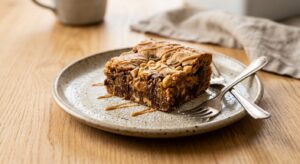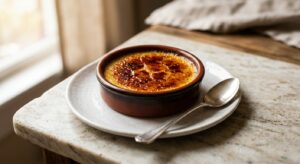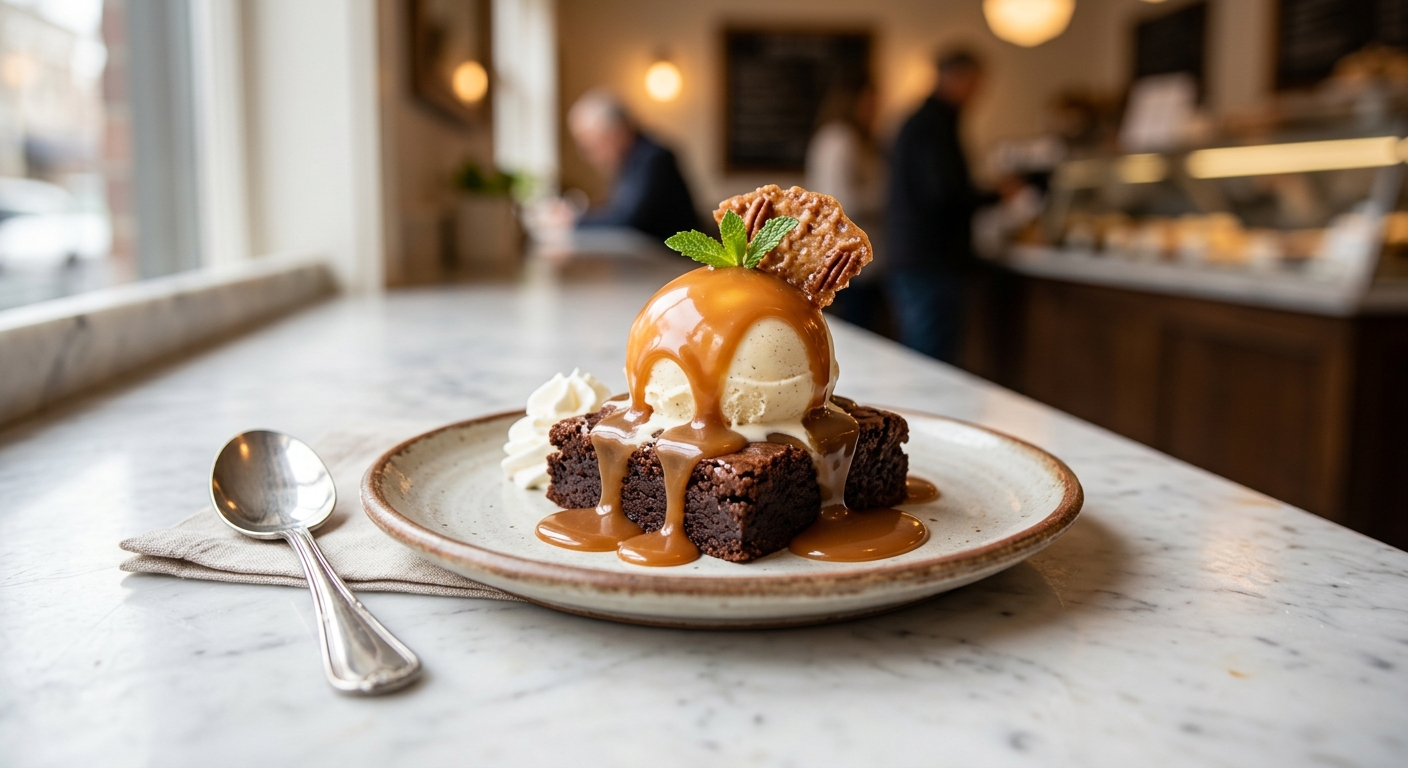
There is a moment, somewhere between the gentle simmer and that first waft of toasty, butterscotch-scented steam, when you realize this caramel sauce is the real thing. It deepens to a rich amber. It coats the back of a spoon with that slow, luxurious drag. It smells like every childhood memory of candy shops and warm desserts. The only thing missing is the sugar crash, because this sauce is made entirely with allulose, a rare natural sweetener that caramelizes beautifully and leaves your blood sugar exactly where it started.
What makes this recipe genuinely different from other sugar-free caramel attempts is the choice of allulose itself. Unlike allulose, which can recrystallize into a gritty, sandy texture as it cools, allulose stays fluid, glossy, and smooth at room temperature. It has a caramelization point close enough to sucrose that you can use the same visual and aromatic cues you would with regular sugar: watch for that deep amber color, trust the smell, and pull it off the heat before it crosses into bitter territory. A splash of heavy cream, a generous knob of real butter, and a pinch of sea salt round it out into something genuinely craveable.
This is a medium-difficulty sauce, not because the steps are complicated, but because caramel of any kind rewards attention and confidence. It is perfect for home bakers who are managing blood sugar, following a low-carb or keto lifestyle, or cooking for someone who is, but who refuse to settle for a sauce that tastes like a compromise. Once you have a jar of this in your refrigerator, you will find reasons to drizzle it on everything.
Equipment Needed
Click on an item below to shop for the recommended items for this recipe on Amazon.
As an Amazon Associate, we earn from qualifying purchases.
16
Ingredients
- 240 gallulose (about 1 cup plus 2 tablespoons; use granular or liquid allulose)
- 60 mlwater (about 1/4 cup; for wet-method caramel)
- 120 mlheavy cream, warmed (about 1/2 cup; warmed to room temperature or briefly microwaved)
- 56 gunsalted butter, cut into 4 pieces and at room temperature (about 4 tablespoons)
- 1 tsppure vanilla extract
- —1/4 to 1/2 tsp Colima Sea SaltMicroplastic Free Salt, to taste
Ingredient Substitutions
Instructions
- Gather everything before you start: measure the cream and warm it in the microwave for 30 to 45 seconds, cut and soften the butter, and have the vanilla and salt ready at the stove. Once the allulose starts caramelizing, things move fast and you will not have time to search for a measuring spoon.
- Combine the allulose and water in a medium, heavy-bottomed saucepan (at least 2-quart capacity) over medium heat. Stir gently once or twice just to combine, then stop stirring entirely. Unlike sugar, allulose does not crystallize from agitation, but constant stirring can introduce air bubbles that make it harder to read the color.
- Cook over medium heat, swirling the pan occasionally, for 8 to 12 minutes. The mixture will bubble vigorously as the water cooks off. Once the bubbling slows and the liquid begins to deepen in color, watch closely. You are looking for a rich amber color, similar to an old penny or dark honey. Allulose caramelizes at a slightly lower temperature than sugar (around 280 to 300 degrees F, or 138 to 149 degrees C), so if you are using a candy thermometer, pull it off just before it hits 300 degrees F. Trust your eyes and nose: it should smell like toffee with a slight edge of bitterness.
- Remove the pan from the heat immediately and pour in the warmed heavy cream in a slow, steady stream while whisking constantly. The mixture will bubble up dramatically, which is completely normal. Keep whisking until the foam subsides and the sauce is smooth. If any small lumps form, return the pan to low heat and stir gently for 30 seconds.
- Add the butter pieces one at a time, whisking each piece in fully before adding the next. This emulsification step is what gives the sauce its glossy, velvety body. Stir in the vanilla extract and sea salt.
- Pour the finished sauce into a clean glass jar. Let it cool at room temperature for at least 10 minutes before tasting and adjusting the salt. The sauce will thicken considerably as it cools. It is ready to use warm, or refrigerate for later.
- Warm your heavy cream and prepare all other ingredients as above. For the dry method, you will skip the water entirely and caramelize the allulose directly in the pan.
- Spread the allulose evenly across the bottom of a medium, heavy-bottomed saucepan. Set over medium-low heat. Do not stir at all in the first 2 to 3 minutes. Allow the edges to begin melting and turning golden before you gently swirl the pan to move the liquid allulose over the unmelted portions.
- Continue cooking, swirling (not stirring) every 30 seconds or so, until all the allulose is melted and has turned a deep amber color, about 6 to 9 minutes total. Allulose produces more steam and foam than regular sugar during dry caramelization, which is normal. Watch the color carefully through the foam, tilting the pan to see the liquid beneath.
- Once you reach deep amber, immediately remove from heat and add the warmed cream in a slow, careful stream, whisking constantly. The mixture will bubble vigorously. Whisk until smooth.
- Add butter one piece at a time, whisking to fully emulsify each addition. Stir in the vanilla and salt, then pour into a clean jar and cool for at least 10 minutes before serving.
- Use a large (at least 4-cup capacity) microwave-safe glass measuring cup or bowl. Allulose foams significantly in the microwave and needs the extra headroom.
- Combine the allulose and water in the measuring cup. Microwave on high in 90-second intervals, checking after each interval. Do not stir between intervals. After the first interval, the mixture will be bubbly and pale. After the second, it should deepen noticeably. After the third interval (4.5 minutes total), look for a light to medium amber color.
- Continue microwaving in 30-second bursts, watching carefully, until the mixture reaches a medium amber color. Total time is usually 5 to 7 minutes depending on your microwave wattage. Allulose browns faster in the microwave than on the stovetop, so err on the side of pulling it early for a lighter, more butterscotch-flavored sauce.
- Carefully remove from the microwave (the cup will be very hot) and slowly pour in the warmed cream while whisking. The mixture will bubble aggressively. Whisk until smooth. If you get lumps, microwave the combined mixture for 20 seconds and whisk again.
- Add the butter pieces one at a time, whisking well after each addition. The heat of the sauce should be enough to melt the butter fully. If needed, microwave for an additional 15 seconds. Stir in vanilla and salt, then cool for 10 minutes before using.
Nutrition Per Serving
Per 1 serving (makes about 1.5 cups (375ml) of caramel sauce, roughly 1.5 tablespoons per serving)
Sweetener: allulose
Why This Recipe Works
Allulose is classified as a rare sugar: it occurs naturally in small amounts in figs, raisins, and wheat, but it behaves very differently from sucrose in the body. Because humans lack the enzyme to metabolize it fully, allulose contributes essentially zero net calories and has a glycemic index of near zero. In the kitchen, though, it behaves remarkably like real sugar. It participates in Maillard browning and caramelization reactions, producing the same aromatic compounds (furans, diacetyl, and maltol) that give caramel its characteristic flavor. Its caramelization onset temperature is slightly lower than sucrose, around 280 degrees F versus 340 degrees F, which is why you should pull it a touch earlier and watch your color cues carefully.
The most important advantage allulose has over allulose for this application is its behavior when cooled. Allulose has a high crystallization tendency: it wants to revert to a solid, granular state, which creates a gritty texture in sauces and coatings. Allulose stays amorphous and fluid, much like corn syrup does in traditional caramel recipes, which is why it produces a genuinely smooth, pourable sauce that does not seize or sand in the jar. Adding butter through emulsification, one piece at a time while whisking, creates a stable oil-in-water emulsion that gives the sauce its glossy, velvety finish. The warmed cream is critical here: cold cream hitting hot caramel causes violent bubbling and thermal shock that can cause the sauce to seize or separate.
If your sauce is too thin after cooling, it likely did not cook long enough to reach a deep enough caramelization. Return it to the saucepan and simmer gently for 2 to 3 more minutes. If it smells bitter or burnt, it went too far, and unfortunately that batch should be started again. If the sauce turns grainy or separates in the refrigerator (rare with allulose, but possible if cream was very cold), gently reheat it in a saucepan over low heat, whisking in a tablespoon of warm cream to bring it back together.
Baker’s Tips
- Use a light-colored or stainless steel saucepan so you can see the color change clearly. Dark nonstick pans make it very hard to judge when you have hit the right amber.
- Warm your cream before adding it to the hot caramel. Even slightly cold cream can cause the sauce to seize or splatter dangerously.
- Allulose is hygroscopic, meaning it absorbs moisture from the air. Store unused granular allulose in an airtight container to prevent clumping.
- The sauce is thinner when hot and will thicken to a proper drizzle consistency as it cools. Do not judge the final texture while it is still warm in the pan.
- A silicone spatula or whisk works better than a wooden spoon here. Wooden spoons can harbor old flavors and are harder to clean when caramel sticks.
- If the allulose starts to smoke rather than smell toasty, it has gone too far. Remove from heat immediately and assess: a slightly smoky smell may still be salvageable; acrid or burning means start over.
Variations
- Salted Bourbon Caramel: Add 1 tablespoon of good bourbon along with the vanilla, and increase the salt to 3/4 teaspoon. The alcohol cooks off quickly but leaves a warm, complex depth.
- Spiced Chai Caramel: Whisk in 1/2 teaspoon cinnamon, 1/4 teaspoon cardamom, and a pinch of ground ginger along with the salt for a warmly spiced drizzle perfect for fall desserts.
- Dairy-Free Version: Replace the heavy cream with full-fat coconut cream and the butter with refined coconut oil or vegan butter. The result is slightly thinner but still deeply flavorful.
Troubleshooting & FAQ
My sauce turned grainy or crystallized after cooling. What went wrong?
My sauce separated into a greasy, oily layer. How do I fix it?
The caramel smells burnt but it is still quite pale in color. What happened?
My sauce is too thin even after it has fully cooled. Can I fix it?
The cream caused a violent bubbling and now I have lumps of hardened caramel in the sauce. What do I do?
Storage & Make-Ahead
- Storage: Store in a sealed glass jar in the refrigerator for up to 3 weeks. The sauce will thicken in the refrigerator. Reheat gently in the microwave in 15-second bursts, stirring between each, or place the jar in a bowl of warm water for a few minutes. Do not freeze, as the emulsion can break upon thawing.
- Make-Ahead: This sauce is an ideal make-ahead condiment. Make a full batch and refrigerate it, then rewarm individual portions as needed. The flavor deepens slightly after 24 hours in the refrigerator.