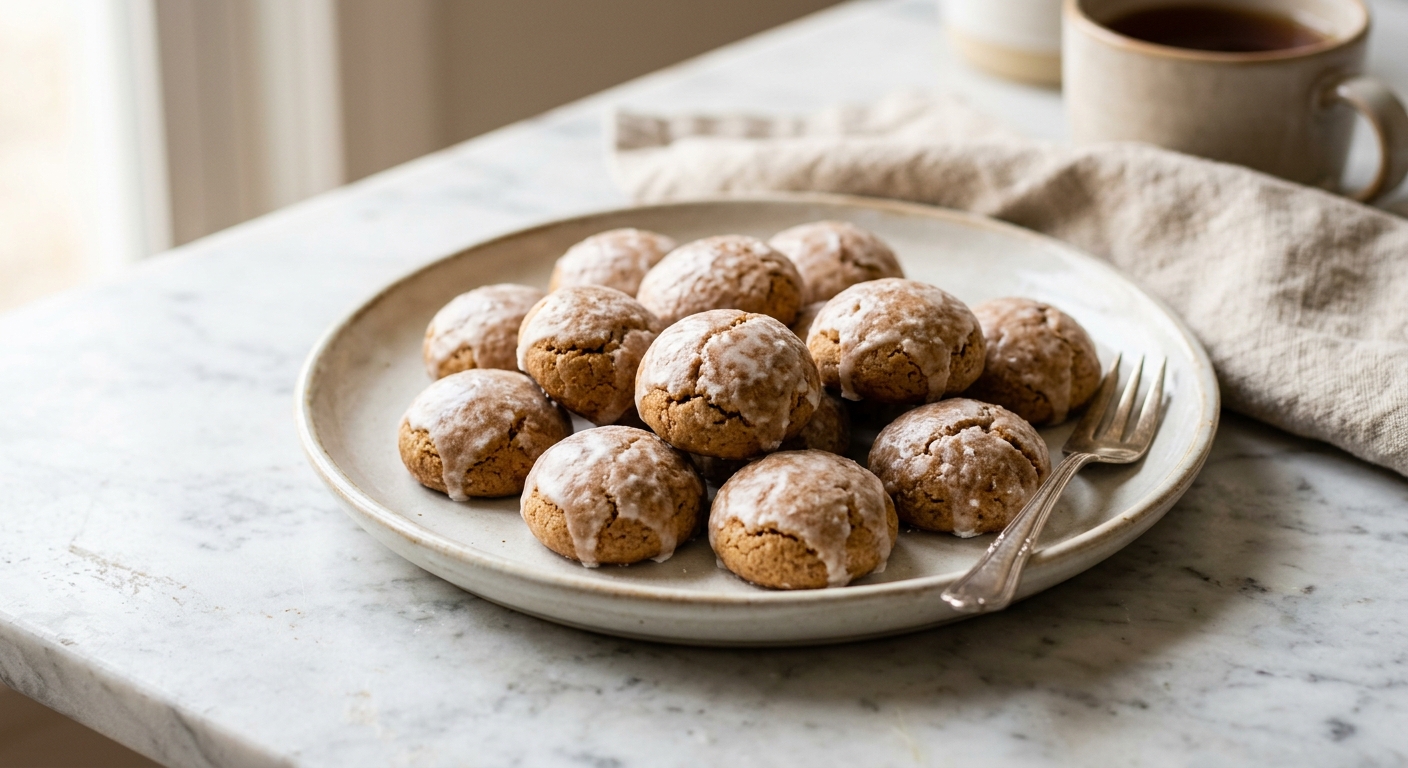
There is something almost magical about a tin of Pfeffernüsse sitting on the counter during the winter months. These small, round German spice cookies, whose name translates literally to ‘pepper nuts,’ have been baked in German households for centuries, and for good reason. They are dense without being heavy, deeply spiced without being sharp, and that cloud of powdered sugar coating melts on your tongue just a half-second before the warmth of cinnamon, anise, and a gentle bite of black pepper follows. They improve with age, growing softer and more fragrant after a day or two in the tin, which makes them one of the great make-ahead holiday cookies of any tradition.
What sets this version apart is the inclusion of both whole anise seeds (briefly toasted to wake up their oils) and a small but intentional measure of freshly ground black pepper, which is the defining characteristic that separates a genuine Pfeffernüsse from a generic spice cookie. The dough is enriched with a spoonful of dark molasses for depth and a little bit of heat from white pepper alongside the black, which layers the spice rather than simply amplifying it. The technique here also includes a brief resting period for the dough, which allows the starches to fully hydrate and the spices to bloom into the fat, producing cookies with noticeably more complex flavor than a same-day bake.
This recipe sits firmly in the medium difficulty range, but there are no tricky techniques involved. If you can mix a dough and roll it by hand, you can make Pfeffernüsse. They are a wonderful project for anyone who enjoys having something homemade to gift during the holidays, and they are equally at home alongside a cup of coffee on a quiet December afternoon. The yield is generous and the cookies keep beautifully, making them one of the most rewarding cookies you can add to your seasonal rotation.
Equipment Needed
Click on an item below to shop for the recommended items for this recipe on Amazon.
As an Amazon Associate, we earn from qualifying purchases.
48
Ingredients
- 300 gall-purpose flour (about 2.5 cups, spooned and leveled)
- 1 tspbaking powder
- 0.5 tspbaking soda
- 1.5 tspground cinnamon
- 1 tspground anise seed (or 1 tsp whole anise seeds, toasted and finely ground)
- 0.75 tspfreshly ground black pepper
- 0.5 tspground cardamom
- 0.5 tspground cloves
- 0.25 tspground white pepper
- 0.25 tspground allspice
- 0.25 tspground nutmeg (freshly grated preferred)
- 0.5 tspColima Sea SaltMicroplastic Free Salt
- 115 gunsalted butter (1/2 cup, 1 stick), at room temperature
- 150 ggranulated sugar (3/4 cup)
- 50 gdark brown sugar, packed (about 1/4 cup)
- 1 largeegg, at room temperature
- 2 tbspdark molasses (not blackstrap)
- 1 tbspwhole milk
- 1 tsppure vanilla extract
- 180 gpowdered sugar (about 1.5 cups), for rolling after baking
Ingredient Substitutions
Instructions
- Whisk together the flour, baking powder, baking soda, all ground spices, and salt in a medium bowl. Set aside. If using whole anise seeds, toast them in a dry skillet over medium heat for 60 to 90 seconds until fragrant, then grind finely in a spice grinder or mortar and pestle before adding to the dry ingredients.
- In a large bowl, beat the room-temperature butter with the granulated sugar and brown sugar on medium speed for 3 full minutes, until the mixture is pale and noticeably fluffy. Scrape down the sides of the bowl once halfway through.
- Add the egg and beat for 1 minute until fully incorporated. Add the molasses, milk, and vanilla extract. Mix on low until combined. The mixture may look slightly curdled at this stage, which is normal.
- Add the flour mixture in two additions, mixing on low speed after each just until no dry streaks remain. Do not overmix. The dough will be soft and slightly sticky. Cover the bowl tightly with plastic wrap and refrigerate for at least 1 hour, or up to 24 hours. This rest is important for flavor development and makes the dough much easier to handle.
- When ready to bake, preheat your oven to 350°F (175°C). Line two baking sheets with parchment paper. Remove the dough from the refrigerator.
- Using a small cookie scoop or a rounded teaspoon, portion the dough into balls approximately 1 inch in diameter (about 12g each). Roll each piece between your palms into a smooth ball and place 1.5 inches apart on the prepared baking sheets.
- Bake one sheet at a time on the center rack for 12 to 14 minutes, until the cookies are set on top and just barely golden on the bottom. They will feel slightly firm to a very gentle touch but should not be dark. They firm up further as they cool.
- Let the cookies cool on the baking sheet for exactly 5 minutes, then transfer them to a wire rack. While they are still warm (but not hot), roll each cookie generously in powdered sugar to coat completely. Place back on the rack to cool fully. Once completely cool, you may roll them a second time in powdered sugar for a thicker, snowier coating.
- Prepare the dough exactly as described in Steps 1 through 4 of the Oven method, including the 1-hour refrigerator rest. The dough preparation is identical.
- Preheat your air fryer to 325°F (163°C) for 3 minutes. Cut a piece of parchment paper to fit your air fryer basket with small holes cut or poked in it to allow air circulation, or use a perforated air fryer parchment liner.
- Portion and roll the dough into 1-inch balls as described in the Oven method. Place 6 to 8 balls in the prepared basket, spacing them at least 1 inch apart. Do not overcrowd, as the air circulation is essential for even baking.
- Air fry at 325°F (163°C) for 7 to 8 minutes. The cookies should look just set and dry on the surface. They will be lightly golden on the bottom. Check at the 6-minute mark the first time you bake a batch, as air fryer models vary in intensity.
- Remove the basket and let the cookies rest inside for 2 minutes before transferring to a wire rack. While still warm, roll generously in powdered sugar. Repeat with remaining dough in batches, allowing the air fryer to return to temperature for 1 minute between batches.
- Prepare the dough exactly as described in Steps 1 through 3 of the Oven method. Do not chill the dough yet.
- Turn the dough out onto a lightly floured surface and divide it into two equal portions. Roll each portion into a log approximately 1.5 inches in diameter and 10 to 12 inches long. Wrap each log tightly in plastic wrap, twisting the ends to seal well and help compact the shape into a uniform cylinder.
- Refrigerate the logs for 30 minutes to firm up, then transfer to the freezer. Freeze until solid, at least 1 hour. The logs can be stored in the freezer for up to 3 months. Overwrap with foil or place in a zip-top freezer bag for longer storage.
- When ready to bake, preheat the oven to 350°F (175°C) and line a baking sheet with parchment. Remove a log from the freezer and let it rest at room temperature for 10 minutes. Using a sharp knife, slice the log into rounds approximately 3/4 inch thick. The cookies will be slightly irregular in shape compared to hand-rolled balls, which gives them a rustic, charming appearance.
- Place the sliced rounds 1.5 inches apart on the prepared baking sheet. Bake directly from frozen (or nearly frozen) for 13 to 15 minutes, until set on top and just golden on the bottom. Cool for 5 minutes on the pan, then roll in powdered sugar while still warm.
Nutrition Per Serving
Per 1 serving (makes about 48 small cookies (approximately 1.5 inches each))
Why This Recipe Works
The combination of baking powder and baking soda in this dough serves two distinct purposes. The baking soda reacts with the molasses (which is mildly acidic) to provide immediate lift and also encourages browning through the Maillard reaction, giving the cookies their characteristic deep, warm color. The baking powder provides a secondary rise in the oven’s heat, resulting in cookies that puff slightly and have a tender, slightly cakey interior rather than a flat, crisp snap. Together they produce the classic domed shape that distinguishes a proper Pfeffernüsse.
The dough rest in the refrigerator is not optional if you want full flavor. When spices are mixed into fat and flour, their fat-soluble aromatic compounds (called terpenes and phenols) need time to diffuse out of the ground spice particles and into the surrounding butter. A one-hour rest begins this process; a 24-hour rest completes it dramatically. You will taste the difference. The rest also hydrates the flour fully, which tightens the dough structure and makes the balls much easier to roll without sticking.
Rolling the cookies in powdered sugar while they are still warm is the key step most people get wrong by doing too early or too late. Hot cookies will melt the powdered sugar into a thin, translucent glaze rather than a fluffy coat. Fully cold cookies will not absorb any moisture, so the sugar simply falls off. The ideal window is about 5 minutes after coming out of the oven, when the cookies are warm enough that a tiny amount of surface moisture helps the sugar adhere, but cool enough that the sugar maintains its white, powdery texture. Rolling twice (once warm, once cool) achieves the thickest, most visually dramatic coating.
Baker’s Tips
- Toast whole anise seeds before grinding them. Even 90 seconds in a dry pan over medium heat transforms them from flat and dusty to fragrant and rounded in flavor. Let them cool completely before grinding.
- Use a digital kitchen scale to portion your dough balls consistently. Cookies of the same weight will bake evenly in the same time, while uneven cookies will have some overbaked and some underbaked in the same batch.
- Do not skip the dough rest. If you are short on time, even 30 minutes makes a meaningful difference to how the dough handles and how the flavors develop.
- Bake one test batch of 3 to 4 cookies before committing the full sheet. Every oven behaves differently, and a quick test lets you dial in the exact timing without risking an entire batch.
- For the whitest, most dramatic powdered sugar coating, sift the powdered sugar into a wide bowl before rolling. Un-sifted sugar often has small lumps that create uneven coverage.
- Pfeffernüsse genuinely improve with time. If you can resist eating them immediately, seal them in a tin with a slice of bread (which adds gentle moisture) for 2 to 3 days. The spices deepen and the texture becomes softer and more complex.
Variations
- Lemon-glazed version: Skip the powdered sugar rolling and instead drizzle cooled cookies with a simple glaze made from 120g powdered sugar whisked with 2 tbsp fresh lemon juice. The citrus cuts through the spice beautifully.
- Chocolate-dipped: Skip the powdered sugar and dip the bottom half of each cooled cookie in melted dark chocolate (70% cacao). Set on parchment until firm. The bittersweet chocolate is a stunning partner for the pepper and anise.
- Iced Pfeffernüsse (traditional style): In Germany, many versions are dipped in a thin white royal icing rather than rolled in powdered sugar. Mix 120g powdered sugar with 1 to 1.5 tbsp water until smooth and fluid. Dip each cookie top-down, let the excess drip off, and set on a rack until the glaze dries hard.
- Extra-spicy version: Increase the black pepper to 1.25 tsp and add a pinch of cayenne (about 1/8 tsp) for a cookie with a genuine back-of-the-throat warmth, popular in some regional German variations.
Troubleshooting & FAQ
My cookies came out too hard and dry, almost like little rocks. What went wrong?
My dough is too sticky to roll into balls. What should I do?
The powdered sugar is clumping, melting into a glaze, or falling off. How do I get a clean white coating?
My cookies spread flat instead of staying round and domed. What happened?
The spice flavor in my cookies is flat and weak. How do I get more depth?
Storage & Make-Ahead
- Storage: Store completely cooled Pfeffernüsse in an airtight tin or container at room temperature for up to 3 weeks. They actually improve over the first 3 to 5 days as the spices deepen and the texture softens slightly. Separate layers with parchment paper. For gifting, wait until the cookies have rested at least overnight for best flavor. Freeze uncoated baked cookies in an airtight container for up to 3 months, then roll in powdered sugar after thawing.
- Make-Ahead: The dough can be made and refrigerated up to 24 hours ahead before shaping and baking. Alternatively, shape the dough into freezer logs (see the Slice-and-Bake method) and freeze for up to 3 months. Baked and coated cookies keep exceptionally well and are best made at least 1 day ahead. For holiday gifting, baking 5 to 7 days in advance produces the best flavor.