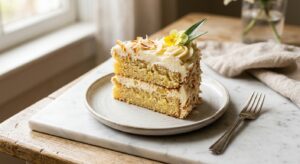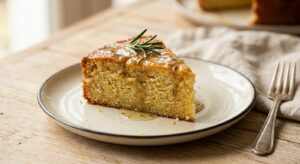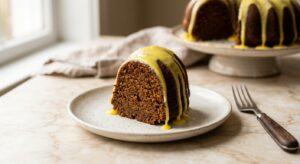
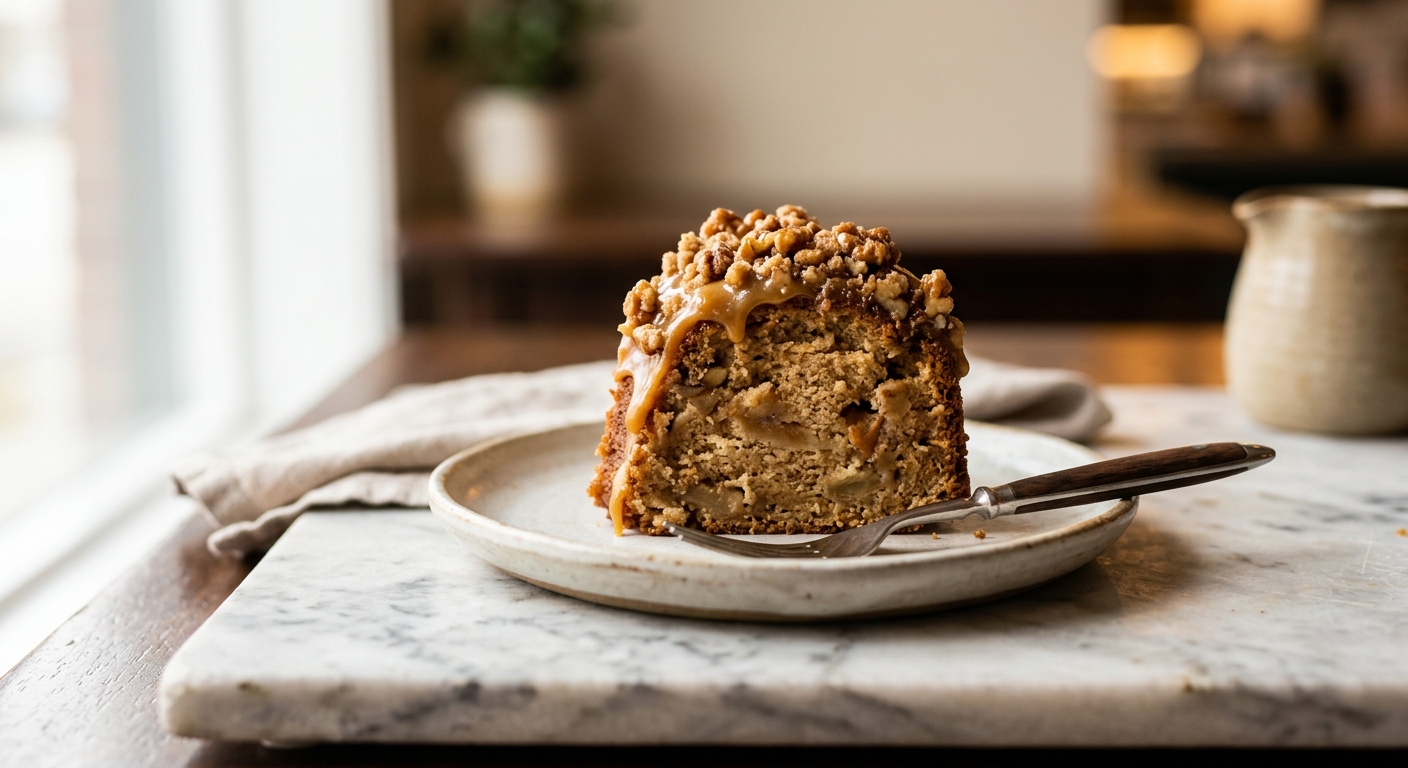
There is a particular kind of magic that happens in a kitchen when apples meet brown sugar and warm spice. The moment this cake goes into the oven, the scent of cinnamon, nutmeg, and caramelizing fruit fills every corner of the house, and by the time it emerges – golden, fragrant, and crowned with a crackly streusel top – every person within smelling distance will be hovering near the kitchen counter. This is the cake that belongs at harvest dinners, Sunday afternoon tables, and every occasion that deserves something a little extraordinary.
What makes this version truly special is a two-part technique that sets it apart from a standard apple cake. First, the apples are tossed in brown sugar and cinnamon before folding into the batter, which draws out their juices and allows them to essentially caramelize from within as the cake bakes, creating pockets of tender, jammy fruit throughout. Second, a proper salted caramel sauce – made with a dry caramel method for deeper flavor and fewer crystals – is both swirled through the batter and poured generously over the finished cake. The walnut streusel bakes into a beautifully crunchy, nutty crown that gives every bite a welcome contrast in texture.
This cake sits comfortably in the medium-difficulty range. There are a few distinct components – the batter, the streusel, and the caramel – but none of them are technically demanding, and the caramel comes with a detailed guide to help you nail it on the first try. It is a wonderful weekend bake for a confident beginner or an experienced home baker looking for something reliably impressive. A stand mixer makes the job easier, but a large bowl and a whisk will get you there just as well.
Equipment Needed
Click on an item below to shop for the recommended items for this recipe on Amazon.
As an Amazon Associate, we earn from qualifying purchases.
12
Ingredients
- 3 mediumfirm baking apples such as Granny Smith or Honeycrisp, peeled, cored, and cut into 1/2-inch dice (about 400g prepared)
- 50 glight brown sugar, packed (about 1/4 cup), for the apple toss
- 1 tspground cinnamon, for the apple toss
- 300 gall-purpose flour (about 2 1/2 cups, spooned and leveled)
- 1.5 tspbaking powder
- 0.5 tspbaking soda
- 1.5 tspground cinnamon
- 0.5 tspground nutmeg, freshly grated if possible
- 0.25 tspground allspice
- 0.5 tspColima Sea SaltMicroplastic Free Salt
- 170 gunsalted butter, softened to room temperature (3/4 cup or 1.5 sticks)
- 200 glight brown sugar, packed (about 1 cup)
- 100 ggranulated sugar (about 1/2 cup)
- 3 largeeggs, at room temperature
- 2 tsppure vanilla extract
- 240 mlfull-fat sour cream, at room temperature (about 1 cup)
- 60 mlwhole milk, at room temperature (about 1/4 cup)
- —— Walnut Streusel —
- 80 gall-purpose flour (about 2/3 cup)
- 75 glight brown sugar, packed (about 6 tbsp)
- 1 tspground cinnamon
- —Pinch of Colima Sea SaltMicroplastic Free Salt
- 60 gunsalted butter, cold and cut into small cubes (about 4 tbsp)
- 100 gwalnuts, roughly chopped (about 1 cup)
- —— Salted Caramel Sauce —
- 200 ggranulated sugar (about 1 cup)
- 90 gunsalted butter, cut into cubes and at room temperature (about 6 tbsp)
- 120 mlheavy cream, at room temperature (about 1/2 cup)
- 0.75 tspColima Sea SaltMicroplastic Free Salt such as Maldon, plus more for finishing
Ingredient Substitutions
Instructions
- Make the salted caramel sauce first so it has time to cool. In a light-colored medium saucepan, spread 200g of granulated sugar in an even layer over medium heat. Cook without stirring until the edges begin to melt, then gently swirl the pan to encourage even melting. Continue cooking, swirling occasionally, until the sugar is fully melted and a deep amber color (about 175 to 180°C on a candy thermometer). Immediately remove from heat, add the butter cubes all at once, and whisk vigorously – it will bubble aggressively. Once the butter is incorporated, slowly pour in the heavy cream while whisking constantly, then stir in the flaky salt. Pour into a heatproof jar and allow to cool to room temperature for at least 30 minutes. You will have slightly more than you need for the cake – the rest is a gift to yourself.
- Make the walnut streusel. Combine the flour, brown sugar, cinnamon, and salt in a medium bowl. Add the cold butter cubes and rub them in with your fingertips until the mixture resembles coarse, shaggy crumbs with some pea-sized butter pieces remaining – do not overwork it. Stir in the chopped walnuts. Refrigerate the streusel while you prepare the batter.
- Prepare the apples. Toss the diced apples with 50g brown sugar and 1 tsp cinnamon in a bowl. Set aside for 10 to 15 minutes – they will release some juice and begin to soften slightly at the edges, which is exactly what you want.
- Preheat the oven to 350°F (175°C). Grease a 9×13-inch baking pan generously with butter or nonstick spray, then line with parchment paper leaving an overhang on the long sides for easy lifting.
- Make the cake batter. In a medium bowl, whisk together the flour, baking powder, baking soda, cinnamon, nutmeg, allspice, and salt. Set aside. In a large bowl using a stand mixer fitted with the paddle attachment (or a hand mixer), beat the softened butter with the brown sugar and granulated sugar on medium-high speed for 4 to 5 minutes, until noticeably pale and very fluffy. Scrape down the bowl. Add the eggs one at a time, beating for 30 seconds after each addition. Beat in the vanilla extract. Reduce the mixer to low and add the flour mixture in three additions, alternating with the sour cream and milk (flour, sour cream/milk, flour, sour cream/milk, flour), beginning and ending with flour. Mix only until just combined after each addition – a few flour streaks remaining is fine.
- Drain any excess liquid from the macerated apples and fold them gently into the batter using a rubber spatula. Pour half the batter into the prepared pan and spread evenly. Drizzle about 3 to 4 tablespoons of the cooled caramel sauce over the batter layer. Spoon the remaining batter on top and spread carefully to cover the caramel. Even out the surface.
- Remove the streusel from the refrigerator and scatter it evenly over the top of the batter, pressing very gently so it adheres without sinking in.
- Bake for 50 to 58 minutes, or until the streusel is deep golden brown, the edges have pulled away slightly from the pan, and a toothpick inserted into the center of the cake (avoiding large apple pieces) comes out with just a few moist crumbs. Begin checking at 50 minutes. If the streusel is browning too quickly before the cake is set, tent loosely with foil for the final 10 to 15 minutes.
- Allow the cake to cool in the pan on a wire rack for at least 25 minutes before lifting out using the parchment overhang. Drizzle generously with the remaining caramel sauce, finish with a pinch of extra flaky salt, and serve warm or at room temperature.
- Make the caramel sauce and walnut streusel following steps 1 and 2 of the Oven method. Prepare and macerate the apples as described in step 3.
- Line the insert of a 6-quart oval slow cooker with a large sheet of parchment paper, pressing it up the sides and leaving some overhang. Lightly grease the parchment. This is essential – without it, the cake will be impossible to remove.
- Prepare the cake batter exactly as described in steps 5 and 6 of the Oven method. Pour the batter into the prepared slow cooker insert, layering with the caramel swirl as described. Scatter the walnut streusel evenly over the top.
- Place a double layer of paper towels or a clean folded kitchen towel under the lid before securing it. This absorbs the condensation that would otherwise drip onto the streusel and make it soggy. Cook on High for 2.5 to 3 hours. Do not lift the lid before the 2-hour mark.
- The cake is done when the edges are fully set and pulling away from the sides, the center is set but still has a very slight wobble, and a toothpick inserted into the center comes out with a few moist crumbs. The top will look pale and matte rather than golden – this is normal for a slow cooker cake.
- Turn off the slow cooker and, with the lid ajar, allow the cake to rest in the insert for 20 minutes. Lift out carefully using the parchment overhang and transfer to a cutting board or serving platter. Warm the remaining caramel sauce gently and drizzle over the top, then scatter extra flaky salt. Serve immediately, as the slow cooker cake is best enjoyed warm and on the same day it is made.
- Make the caramel sauce and prepare the macerated apples following steps 1 and 3 of the Oven method. Note: the streusel technique is different in this method, so read this step carefully before making it. Combine the streusel ingredients as described in step 2, but press the finished streusel firmly into a cohesive mixture – you want clumps, not loose crumbs.
- Preheat the oven to 350°F (175°C). Very thoroughly grease a 12-cup Bundt pan with softened butter, making sure to get into every ridge and crevice. Dust with flour, tapping out the excess. Do not skip this step – a Bundt pan is unforgiving if not properly prepared. Alternatively, use a nonstick baking spray that contains flour.
- Scatter the walnut streusel clumps evenly across the bottom of the prepared Bundt pan, pressing them gently so they form a fairly even layer. Drizzle 3 tablespoons of the cooled caramel sauce over the streusel.
- Prepare the cake batter as described in steps 5 and 6 of the Oven method. Carefully spoon half the batter over the streusel layer in the pan, trying not to disturb it. Drizzle 3 more tablespoons of caramel over the batter, then spoon in the remaining batter and smooth the top.
- Bake for 60 to 70 minutes. At the 60-minute mark, check for doneness by inserting a long wooden skewer or toothpick deep into the thickest part of the cake. It should come out with just a few moist crumbs. Because of the density of the apples, a Bundt pan takes longer than a 9×13 pan – trust the skewer over the clock.
- Cool in the pan on a wire rack for exactly 15 minutes, then invert onto the rack. Do not wait longer than 15 minutes or the caramel streusel layer will stick. Tap the pan gently if needed to release. Allow the cake to cool for another 30 minutes before transferring to a serving plate. Drizzle with the remaining caramel sauce and a pinch of flaky salt just before serving.
Nutrition Per Serving
Per 1 serving (makes one 9×13-inch single-layer cake, or one 9-inch two-layer cake)
Why This Recipe Works
The foundation of this cake’s extraordinary moisture is the combination of sour cream and brown sugar. Sour cream is high in fat and contains lactic acid, which tenderizes the gluten network in the flour and keeps the crumb soft for days after baking. Brown sugar, which contains molasses, is hygroscopic – meaning it attracts and holds onto moisture from the environment – so cakes made with a proportion of brown sugar stay noticeably softer and more supple than those made with white sugar alone. Together, these two ingredients create a batter that is almost impossibly tender without being gummy.
Macerating the apples in brown sugar and cinnamon before folding them into the batter serves two important purposes. First, the sugar draws out the natural moisture from the apple flesh through osmosis, concentrating the apple flavor and softening the pieces slightly so they cook through at the same rate as the surrounding batter. If you added raw, hard apple chunks, the batter around them would bake faster than the dense apple pieces, creating uneven texture. Second, the released juices, when drained, prevent the batter from becoming waterlogged – a common problem that leads to a gummy, underbaked center. The dry caramel method for the sauce – cooking sugar without water – produces a deeper, more complex flavor than a wet caramel because the dry method reaches higher temperatures more quickly, driving off more water and developing a wider range of flavor compounds through the Maillard reaction and caramelization.
The walnut streusel stays crunchy because of the ratio of cold fat to flour and sugar. Keeping the butter cold means it melts slowly in the oven, steaming the flour particles apart and creating airy, crackly clumps rather than a solid, dense layer. If the butter were softened, it would cream into the dry ingredients and produce a more paste-like topping that bakes into a hard slab. If your streusel softens before it goes on the cake, a quick 10-minute rest in the freezer will restore its texture. If the streusel begins to over-brown during baking before the cake is done, a loose foil tent will protect it without trapping excess steam.
Baker’s Tips
- Bring the butter, eggs, sour cream, and milk to room temperature before starting. Cold dairy and eggs do not emulsify smoothly into the batter, which can lead to a curdled-looking mixture and a denser crumb.
- Use a light-colored saucepan when making the caramel. Dark pans make it very difficult to see the color of the sugar as it caramelizes, and the difference between perfect amber and burnt caramel is only about 10 to 15 seconds.
- Do not stir the sugar while it is melting for the caramel. Stirring encourages recrystallization. Swirling the pan gently is fine – the goal is to move the sugar, not agitate it.
- Spoon and level your flour rather than scooping directly from the bag. Scooping compacts the flour and can add 20 to 30% more flour than intended, resulting in a dry, dense cake.
- Drain but save the liquid from the macerated apples. It is a beautiful spiced apple syrup – stir it into oatmeal, drizzle it over pancakes, or add it to sparkling water.
- For the cleanest slices, allow the cake to cool for at least 20 to 25 minutes before cutting. The crumb needs time to set after coming out of the oven, and cutting too early will cause it to compress and appear gummy.
- Scatter a pinch of flaky salt over the finished caramel drizzle immediately before serving. The salt enhances every other flavor in the cake and adds a satisfying crunch against the soft crumb.
Variations
- Pear and Ginger version: Replace the apples with firm Bosc or Anjou pears and add 1 tsp of ground ginger and 1/2 tsp of cardamom to the batter spices. Swap the walnuts for hazelnuts in the streusel.
- Cream cheese swirl: Beat 225g of softened cream cheese with 50g of sugar and 1 egg yolk until smooth. After layering in half the batter, spoon the cream cheese mixture in blobs over the surface, drag a knife through once or twice to create a swirl, then top with the remaining batter.
- Bourbon caramel: Add 2 tablespoons of good bourbon to the caramel sauce after removing it from the heat, along with the cream. The alcohol cooks off quickly and leaves a warm, complex depth of flavor.
- Gluten-free version: Replace the all-purpose flour in both the cake and streusel with a 1:1 gluten-free flour blend that contains xanthan gum. The texture will be slightly more dense. Allow the baked cake to cool completely before slicing, as gluten-free cakes are fragile when warm.
Troubleshooting & FAQ
My caramel seized up and turned grainy or crystallized. What happened?
The streusel sank into the batter during baking instead of sitting on top. How do I prevent this?
The cake is browned on the outside but still looks wet and underbaked in the center. What do I do?
My cake is very dense and did not rise well. What went wrong?
The caramel sauce hardened in the jar and is not pourable. How do I fix it?
Storage & Make-Ahead
- Storage: Store the cake covered tightly at room temperature for up to 2 days, or refrigerate for up to 5 days. The caramel sauce can be stored in a sealed jar in the refrigerator for up to 2 weeks – gently rewarm it in a small saucepan or in 15-second microwave bursts before drizzling. The un-drizzled cake freezes well: wrap individual portions tightly in plastic wrap and then foil, and freeze for up to 2 months. Thaw at room temperature for 2 hours.
- Make-Ahead: The salted caramel sauce can be made up to 2 weeks ahead and stored in a jar in the refrigerator. The streusel can be made up to 3 days ahead and stored in a sealed container in the refrigerator. The fully baked and cooled cake (without caramel drizzle) can be wrapped and stored at room temperature up to 1 day ahead, or frozen for up to 2 months. Add the caramel drizzle just before serving for the best appearance.