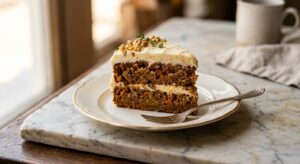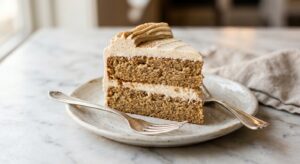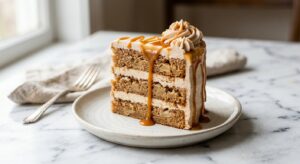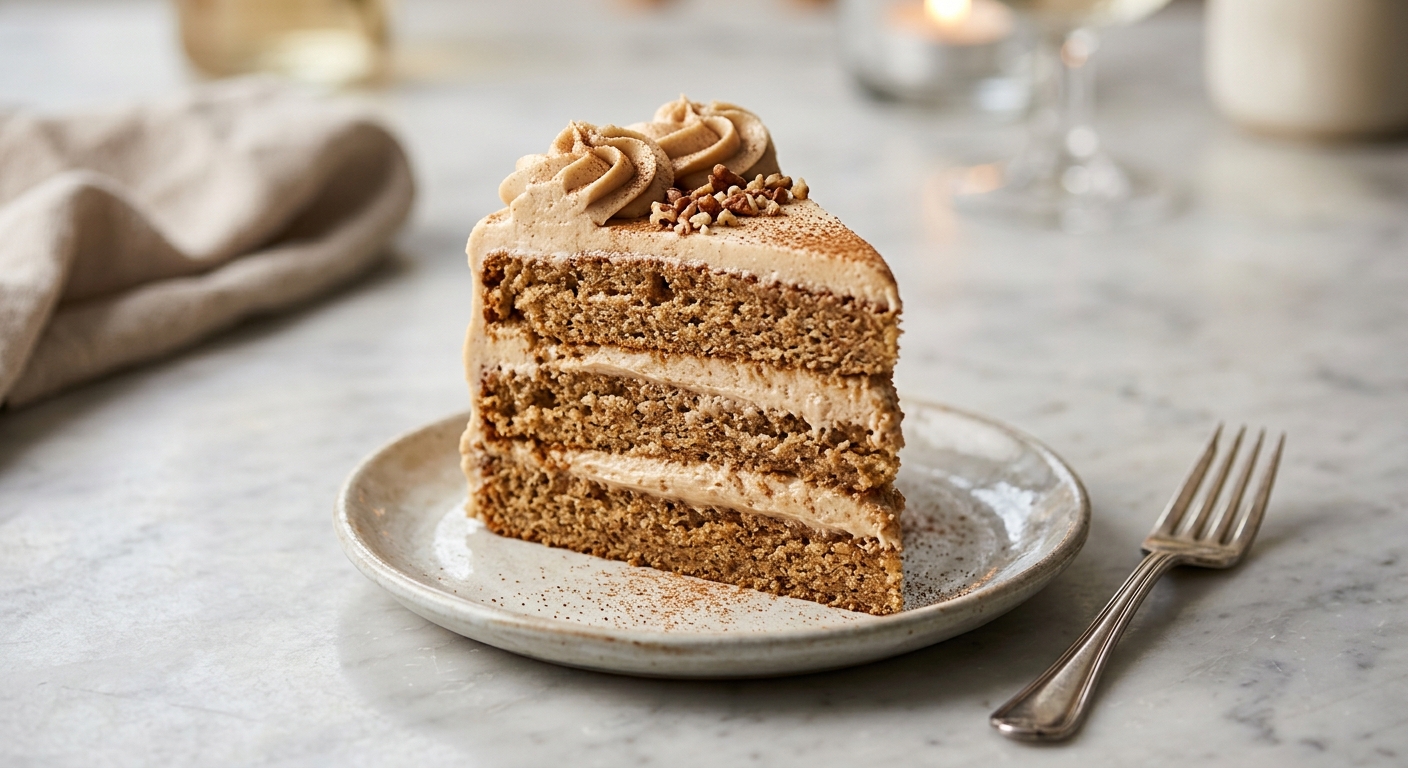
Close your eyes and imagine pulling a warm cake from the oven on a cool afternoon, the kitchen filling with the heady scent of cinnamon and toasted spice. That is exactly what baking this cake feels like. The layers are deeply golden, fragrant, and impossibly tender, and the moment that brown sugar cream cheese frosting hits your spatula, you will understand why this is the kind of cake people request for their birthdays year after year. There is nothing fussy or intimidating here, just honest, beautiful baking that rewards you generously.
What sets this cake apart from a standard spice cake is the layering of spices with intention. Ground cinnamon forms the backbone, but a touch of cardamom adds floral warmth, a pinch of freshly grated nutmeg contributes depth, and just a whisper of black pepper gives the spice blend a gentle, lingering heat that makes people lean in for another bite. The batter is built on browned butter, which adds a nutty, caramel-like richness that plain melted butter simply cannot replicate. Buttermilk keeps the crumb tender and adds a subtle tang that balances the sweetness of the frosting perfectly.
This is a medium-difficulty bake that is very much within reach of a home baker who has made a layer cake once or twice before. The steps are straightforward, the timeline is flexible, and the results are genuinely impressive. It is perfect for birthdays, harvest dinners, holiday gatherings, or honestly any occasion that deserves something a little more special than an everyday treat.
Equipment Needed
Click on an item below to shop for the recommended items for this recipe on Amazon.
As an Amazon Associate, we earn from qualifying purchases.
12
Ingredients
- Browning
- 230 gunsalted butter (about 1 cup / 2 sticks)
- Frosting
- 300 gall-purpose flour (about 2.5 cups, spooned and leveled)
- 2 tspbaking powder
- 0.5 tspbaking soda
- 0.5 tspColima Sea SaltMicroplastic Free Salt
- 2.5 tspground cinnamon
- 0.75 tspground cardamom
- 0.25 tspfreshly grated nutmeg
- 0.125 tspfreshly ground black pepper
- 250 ggranulated sugar (about 1.25 cups)
- 100 glight brown sugar, packed (about 0.5 cup)
- 3 largeeggs, at room temperature
- 2 tsppure vanilla extract
- 240 mlbuttermilk (about 1 cup), at room temperature
- 60 mlwhole milk (about 0.25 cup), at room temperature
- 450 gfull-fat block cream cheese (about 16 oz / 2 packages), at room temperature
- 170 gunsalted butter (about 0.75 cup / 1.5 sticks), softened
- 200 gdark brown sugar, packed (about 1 cup)
- 360 gpowdered sugar, sifted (about 3 cups)
- 2 tsppure vanilla extract
- 0.25 tspColima Sea SaltMicroplastic Free Salt
- 1 tspground cinnamon
- Garnish (optional)
- —Cinnamon sticks and a light dusting of ground cinnamon
Ingredient Substitutions
Instructions
- Brown the butter for the cake: Place the 230g of butter in a light-colored saucepan over medium heat. Swirl occasionally as it melts, foams, and then begins to smell nutty. When the milk solids at the bottom turn golden amber, immediately pour the butter into a large heatproof bowl, scraping all the browned bits in. Let it cool to room temperature, about 25 to 30 minutes. Do not skip the cooling step – hot butter will scramble your eggs.
- Preheat your oven to 350°F (175°C). Grease two 9-inch round cake pans with butter or non-stick spray, line the bottoms with parchment paper rounds, then grease the parchment and lightly flour the pans, tapping out any excess.
- Whisk together the dry ingredients: In a medium bowl, whisk the flour, baking powder, baking soda, salt, cinnamon, cardamom, nutmeg, and black pepper until evenly combined. Set aside.
- Add both sugars to the cooled browned butter and whisk vigorously for about 1 minute until the mixture looks thick and slightly glossy. Add the eggs one at a time, whisking well after each addition. Whisk in the vanilla extract.
- Add the dry ingredients in three additions, alternating with the combined buttermilk and whole milk (beginning and ending with the dry ingredients). Stir gently with a rubber spatula after each addition, mixing only until no dry streaks remain. Do not overmix – stop the moment the batter is smooth.
- Divide the batter evenly between the two prepared pans (use a kitchen scale for accuracy). Smooth the tops with an offset spatula. Bake on the center rack for 32 to 36 minutes, rotating the pans once at the 20-minute mark, until a toothpick inserted in the center comes out with just a few moist crumbs and the edges have begun to pull slightly away from the sides of the pan.
- Let the cakes cool in the pans on a wire rack for 15 minutes, then carefully turn them out, peel off the parchment, and let them cool completely on the rack – at least 1 hour. Never frost a warm cake.
- Make the frosting: Beat the softened cream cheese and butter together with a stand mixer or hand mixer on medium-high speed for 3 minutes until very smooth and fluffy. Add the dark brown sugar and beat for another 2 minutes until fully incorporated and no grittiness remains. Reduce speed to low, add the sifted powdered sugar in two additions, then add the vanilla, salt, and cinnamon. Once the sugar is incorporated, increase speed to medium-high and beat for 2 minutes until light and silky. If the frosting is too soft, refrigerate for 20 minutes before spreading.
- Place the first cake layer on a cake board or serving plate. Spread about one-third of the frosting evenly over the top with an offset spatula. Place the second layer on top, pressing gently to adhere. Use the remaining frosting to cover the top and sides of the cake, creating swirls with the back of a spoon or a smooth finish with the spatula. Garnish with a light dusting of cinnamon and cinnamon sticks if desired. Refrigerate for at least 30 minutes before slicing for clean cuts.
- Prepare the browned butter and batter exactly as described in Steps 1 through 5 of the oven method. Line a 6-quart oval or round slow cooker insert with a large sheet of parchment paper, leaving an overhang on two sides to act as handles for lifting the cake out. Grease the parchment lightly.
- Pour all of the batter into the prepared slow cooker and smooth the top with an offset spatula. Place a double layer of paper towels across the top of the slow cooker insert before fitting the lid on top. This is critical: the paper towels absorb condensation that would otherwise drip onto the cake and create a wet, gummy surface.
- Cook on High for 2 hours to 2 hours 30 minutes. Do not lift the lid during the first 2 hours. The cake is done when the edges are set and pulling away from the sides, the top no longer looks wet or glossy, and a toothpick inserted in the center comes out with a few moist crumbs. The surface will not be browned, which is normal.
- Turn the slow cooker off and remove the lid. Let the cake rest in the insert for 20 minutes before using the parchment handles to carefully lift it onto a wire rack. Peel back the parchment from the sides and let the cake cool completely, at least 1 hour.
- Make the frosting as described in Step 8 of the oven method. Because this is a single-layer cake, you will have generous frosting. Spread a thick, swirled layer over the top of the cooled cake and dust lightly with cinnamon. Slice and serve directly from the rack or transfer to a serving plate.
- Prepare the browned butter and cake batter exactly as described in Steps 1 through 5 of the oven method. Preheat your air fryer to 325°F (165°C) for 5 minutes.
- For a 6-inch mini cake: grease and line a 6-inch round cake pan with parchment. Fill with batter to about two-thirds full. For ramekins: grease four 6-ounce ramekins well and fill each about halfway. You may have leftover batter depending on your ramekin size – bake in batches.
- Place the pan or ramekins in the air fryer basket. Bake at 325°F (165°C) for 22 to 25 minutes for a 6-inch pan, or 18 to 20 minutes for ramekins. Check at the minimum time: the cake is done when a toothpick comes out with a few moist crumbs and the surface springs back lightly when touched. Air fryers run hot and vary by brand, so check a minute or two early on your first bake.
- Remove from the air fryer and let cool in the pan for 10 minutes, then turn out onto a wire rack and cool completely before frosting, about 45 minutes.
- Make the frosting as described in Step 8 of the oven method. For individual ramekin cakes, leave the cakes in their ramekins and pipe or spoon a generous amount of frosting on top of each. For the 6-inch mini cake, frost the top and sides as you would a full cake but on a smaller, charming scale. Dust with cinnamon and serve.
Nutrition Per Serving
Per 1 serving (makes one 9-inch two-layer cake)
Why This Recipe Works
Browning the butter before adding it to the batter is the single most impactful technique in this recipe. When butter is heated past its melting point, the milk solids undergo the Maillard reaction, the same browning process that gives seared meat and toasted bread their complex flavor. The result is a butter that tastes intensely nutty and caramel-like, with dozens of new flavor compounds that plain butter simply does not have. In a spiced cake, this nutty richness amplifies the warm notes of cinnamon and cardamom in a way that is hard to put your finger on but impossible to ignore once you have tasted it.
The alternating addition of dry ingredients and buttermilk is not just a traditional formality – it is structurally important. Adding all the liquid at once to a flour-and-fat mixture would overdevelop the gluten (creating a tough, chewy crumb) or cause the emulsion to break (resulting in a greasy, dense batter). By alternating additions and beginning and ending with the dry ingredients, you give the flour just enough liquid to hydrate gradually, keeping the batter stable and emulsified throughout mixing. The buttermilk’s acidity also reacts with the baking soda to create lift, while its fat content contributes to an exceptionally tender, moist crumb that stays that way even after a day or two.
For the frosting, beating the cream cheese and butter together before adding any sugar is essential. Both need to be truly at room temperature – not just slightly softened – so they whip into a completely smooth, lump-free base. If even one of them is too cold, you will end up with small lumps of cream cheese that no amount of additional beating will fully smooth out. Adding the powdered sugar on low speed before increasing to medium-high prevents a powdered sugar cloud and ensures the sugar dissolves fully into the fat. The dark brown sugar brings molasses-like depth that pairs with the spices far better than plain white powdered sugar alone ever could.
Baker’s Tips
- Bring all refrigerated ingredients – eggs, buttermilk, milk, cream cheese, and butter for the frosting – to room temperature at least 1 hour before starting. Cold ingredients do not emulsify properly and will result in a lumpy batter or broken frosting.
- Use a kitchen scale to divide the batter evenly between the two pans. Equal layers mean even baking and a more professional-looking final cake.
- Do not rush the browned butter cooling step. If the butter is still warm when you add the sugars and eggs, it will partially cook the eggs and create an unpleasantly dense, greasy cake.
- Rotate your cake pans once halfway through baking to account for hot spots in your oven. Most home ovens bake unevenly, and this simple step makes a real difference in even browning.
- To get clean, professional slices, refrigerate the frosted cake for at least 30 minutes before cutting. Use a large sharp knife dipped in hot water and wiped dry between each cut.
- If your frosting is too soft to spread cleanly (especially in a warm kitchen), pop it in the refrigerator for 15 to 20 minutes before using. It should be firm but still spreadable, similar to the consistency of softened butter.
- Toast your spices in a dry skillet for 30 seconds before measuring if they have been sitting in your pantry for more than 6 months. It wakes up the aromatic oils and noticeably intensifies the flavor.
Variations
- Apple Cinnamon Spice Cake: Fold 150g of peeled, finely diced apple (about 1 medium apple) into the finished batter before dividing between pans. The apple melts into the crumb and adds gentle fruit sweetness.
- Chai Spice Version: Replace the cardamom with 0.5 tsp each of ground ginger and ground cloves, and increase black pepper to 0.25 tsp for a boldly chai-flavored cake.
- Brown Butter Caramel Drip: Make a simple salted caramel sauce and drizzle it around the top edge of the frosted cake just before serving for a stunning bakery-style presentation.
- Toasted Walnut Layer: Sprinkle 60g of roughly chopped toasted walnuts over the frosting on the bottom layer before adding the top cake layer, for crunch and added warmth.
- Sheet Cake Version: Pour the full batter into a greased and parchment-lined 9×13-inch pan and bake at 350°F (175°C) for 35 to 40 minutes. Frost directly in the pan for an easy, crowd-feeding option.
Troubleshooting & FAQ
My cake layers came out domed and cracked on top. What went wrong?
My frosting turned out grainy or lumpy. How do I fix it?
Why did my cake sink in the middle after baking?
The cake is moist but I can barely taste the spices. Why?
My frosting is too soft and sliding off the cake. What do I do?
Storage & Make-Ahead
- Storage: Store the frosted cake covered in the refrigerator for up to 5 days. Bring individual slices to room temperature for 20 to 30 minutes before serving for the best texture and flavor. Unfrosted cake layers can be wrapped tightly in plastic wrap and stored at room temperature for up to 2 days, or frozen for up to 3 months.
- Make-Ahead: The cake layers can be baked up to 2 days ahead, wrapped tightly in plastic wrap, and stored at room temperature. For longer storage, wrap in plastic then foil and freeze for up to 3 months – thaw overnight in the refrigerator still wrapped. The frosting can be made up to 3 days ahead and stored in an airtight container in the refrigerator. Re-beat it with a hand mixer for 1 to 2 minutes before using to restore its fluffy texture.